
Image from Freepik
International sports car racing is often defined by what happens on track: lap times, pit strategies, driver changes, and dramatic finishes. Yet long before a car lines up on the grid at Le Mans, Spa, or Fuji, an equally complex operation has already unfolded behind the scenes. Getting race cars, spare parts, and support equipment safely across continents is one of the least visible but most critical aspects of modern motorsport. For teams, private entrants, and historic racing outfits alike, professional vehicle transport services such as A1 Auto Transport are part of a broader logistical ecosystem that mirrors the precision and planning seen on race day itself.
Transporting a race car internationally is not simply about moving a vehicle from point A to point B. It is a coordinated process involving timing, customs, protection, and risk management, all of which must align perfectly with tight racing calendars.
Racing Schedules Leave No Room for Error
Modern sports car championships operate on global schedules. Series such as the FIA World Endurance Championship or international GT competitions regularly move between Europe, Asia, the Middle East, and the Americas within a single season. Events are often separated by only a few weeks, leaving minimal margin for delays.
Teams must ensure that cars arrive early enough for scrutineering, testing, and setup. A delayed shipment can mean missed practice sessions or, in extreme cases, exclusion from the event. This is why transport planning often begins months in advance, running in parallel with car development and race preparation.
Multiple Transport Methods, One Objective
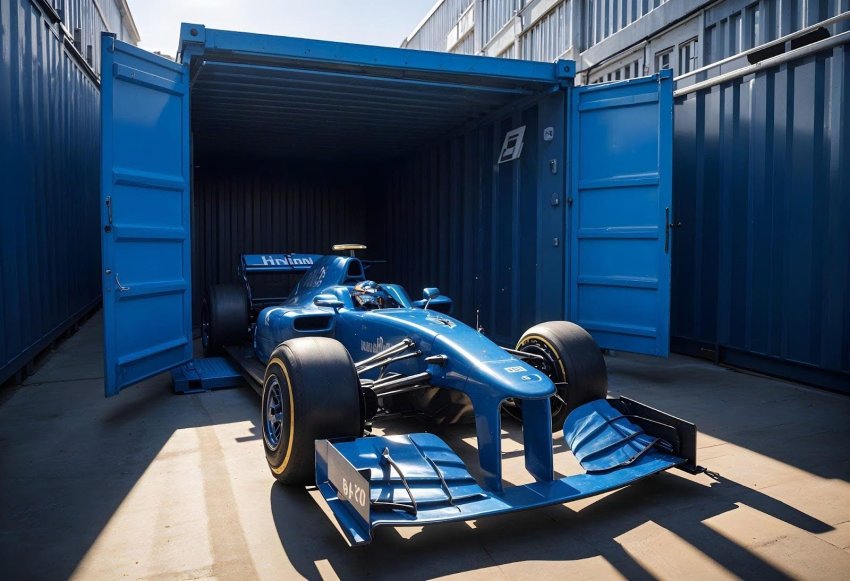
Image from Freepik
Race cars are moved using a combination of air freight, sea freight, and ground transport. Each method has advantages and trade-offs depending on distance, budget, and urgency.
Air freight is the fastest option and is commonly used for flyaway races where time is the primary constraint. Cars are typically secured in custom-built containers designed to protect delicate aerodynamic components. Sea freight, while slower, is often used for bulk equipment and cars traveling between continents with longer lead times. Ground transport plays a crucial role within regions, especially across Europe, where teams move from circuit to circuit by specialized transporters.
The challenge lies in synchronizing these methods so that everything arrives together and on schedule.
Protecting Highly Specialized Machinery
Unlike road cars, race cars are purpose-built machines with exposed components, tight tolerances, and materials that are sensitive to vibration and environmental changes. Even minor damage during transport can compromise performance or safety.
For this reason, teams invest heavily in protective measures. Cars are partially disassembled, fluids may be drained, and sensitive parts are secured separately. Suspension components, wings, and body panels are often transported in dedicated cases. Temperature and humidity control can also be a factor, particularly for historic or endurance cars with unique materials.
This emphasis on protection explains why transport is treated as a technical discipline rather than a simple logistical task.
Customs, Carnets, and Paperwork
Crossing borders with race cars involves far more than loading and unloading. International motorsport logistics require extensive documentation, including customs declarations and ATA carnets. These documents allow teams to temporarily import vehicles and equipment without paying full duties, provided everything leaves the country after the event.
Managing this paperwork is a specialized skill. Errors can result in delays, fines, or cars being held at ports. Teams often work with logistics partners who understand the regulatory landscape of different regions and can anticipate potential issues before they arise.
According to guidance published by organizations such as the Fédération Internationale de l’Automobile (FIA), compliance with customs and transport regulations is a foundational requirement for international competition, highlighting how deeply logistics is embedded in the sport’s governance.
Historic Racing Faces Unique Challenges
Historic sports car racing adds another layer of complexity. Many classic race cars are irreplaceable, with components that cannot be easily repaired or reproduced. Owners and teams participating in events like Le Mans Classic or the Goodwood Revival must balance authenticity with modern safety and transport standards.
These cars often require even more careful handling during transport. Enclosed containers, specialized loading procedures, and detailed condition reports are standard practice. For historic racers, the journey to the event is as carefully managed as the race itself, reflecting the cultural and financial value of the vehicles.
The Human Element Behind the Logistics
While technology and systems play a major role, motorsport logistics ultimately depend on people. Dedicated logistics managers coordinate schedules, liaise with freight providers, and adapt plans when disruptions occur, a process well documented in international motorsport logistics operations.. Weather, strikes, mechanical issues, or geopolitical events can all force last-minute changes.
Experience matters. Teams that compete internationally year after year develop institutional knowledge that allows them to respond quickly under pressure. This human expertise is one reason why logistics operations often resemble race strategy: flexible, data-driven, and constantly adjusted.
Logistics as a Competitive Advantage
Though rarely discussed in race reports, effective logistics can provide a competitive edge. A car that arrives early allows more time for setup and fine-tuning. Equipment that arrives intact reduces stress on mechanics and engineers. Smooth transport operations free up mental bandwidth, allowing teams to focus on performance rather than problem-solving.
In endurance racing especially, where preparation and reliability are paramount, logistics contributes directly to results. A well-transported car is more likely to perform consistently over long stints, reinforcing the idea that racing success begins long before the green flag.
A Global Operation Hidden in Plain Sight
International sports car racing captures attention through speed and spectacle, but beneath that surface lies a vast logistical network that makes global competition possible. From freight schedules and customs paperwork to protective engineering and human coordination, transporting race cars across continents is a discipline in its own right.
For fans, understanding this hidden side of motorsport adds depth to what they see on track. Every car that takes the start has already completed a journey measured not in laps, but in planning, precision, and trust. In that sense, the race truly begins long before the engines are fired.