NASCAR in Brno?
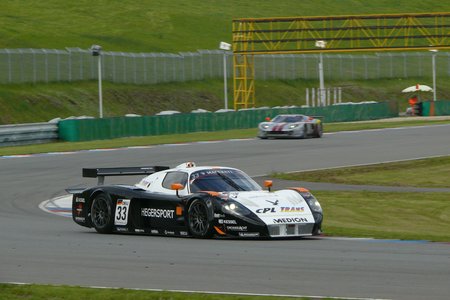
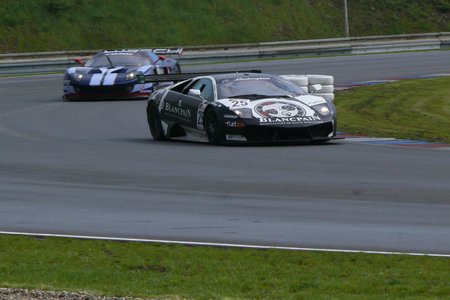
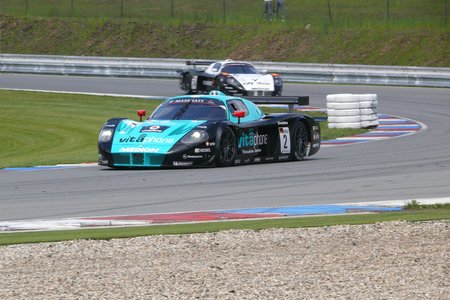
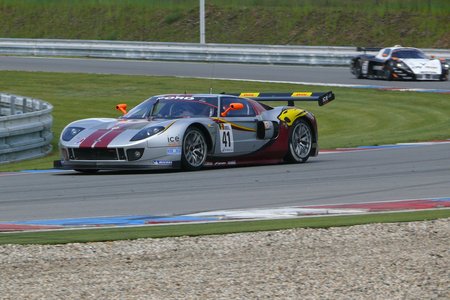
Full of surprising turns and artificial racing events was the third round of the FIA GT1 World Championship race held last weekend in Brno. Out first opinion during the race was that it had really nothing to do with a proper sports car racing but rather a NASCAR-like show. When we spoke to one of the race heroes Tomas Enge, he also used the NASCAR as a comparison so we used it as well. Tomas actually like NASCAR show for the spectators and he spoke positively about the safety car interventions in races in general as well as the very short format, which he sees as a benefit for the spectators.


Unfortunately, the race itself was not mastered well by the organisers. Safety car for every little off course excursion, unlike in the past, terribly made starting procedure, which cost Tomas Enge and his team-mate Darren Turner the lead and perhaps a win and last but not least a chaos in the pit lane at the end of one of the safety car periods. When the SC car turned to pits, it was followed by several racing cars which were about to make their mandatory pit stop and a driver change. Instead of leaving the way free for the pitting GT cars, the safety car ran ahead them and then slowed down so unexpectedly that several cars almost hit it. Random officers at the beginning of the pit lane waved and signalised the SC driver to continue. Fortunately it did not end by an accident.
Heavy accident
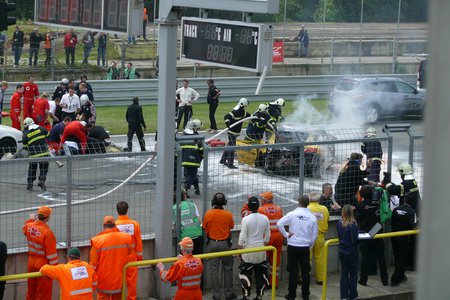
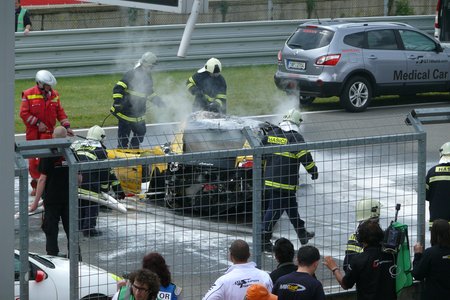
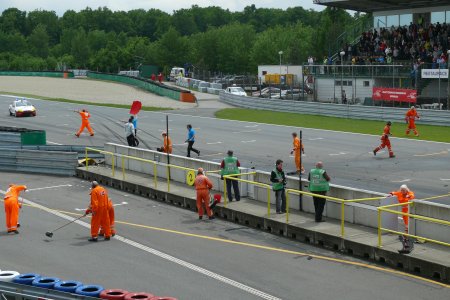
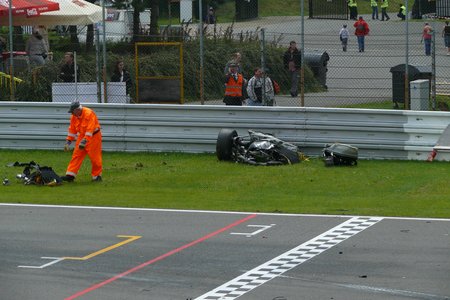
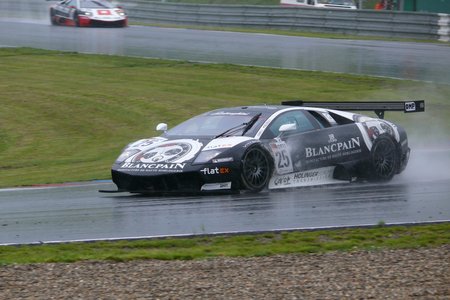
On the other hand, not everything went so bad as in the main race. We would like to express our appreciation to the organisers, firemen and some other volunteers which helped to minimise impact of the most serious accident ever happened in Automotodrom Brno. It was Saturday and the end of the first lap of the Lamborghini Trofeo race, one of one-make support races, when the leading two cars were too wide in the first main straight corner. They went through the grass and since it was very wet the leading driver Giorgio Bartocci completely lost control over his car and in a full speed he hit the wall on the other side of the track so unhappily that the car was split into several pieces and the main part with the driver immediately caught a fire and spinning very quickly stopped in the middle of the track. Fortunately, the modest field of another twelve cars managed to avoid the burning wreck. The race was stopped and a fight for Bartocci's life started even before the last car went by. Despite a local TV presented this rescue action as a wrong one, we were quite happy for the firemen and other stepped-in-persons professionalism and brave effort to extinguish the car and to take the seriously injured and burning driver out of the car. At one moment, when heavy flames and dark smoke dominated all around the circuit, it looked as if the frightening fire was getting out of control. Fortunately, in the coming seconds, which seemed to be long minutes, the car became visible under the decreasing fire. The driver could be finally removed from the car. It was great he was alive and even communicated. He was transported to the hospital by a helicopter. Hours later it was confirmed that Bartocci was sedated and stable, with a fracture to the arm and burns to the legs.
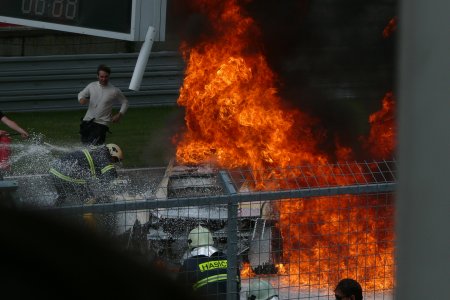
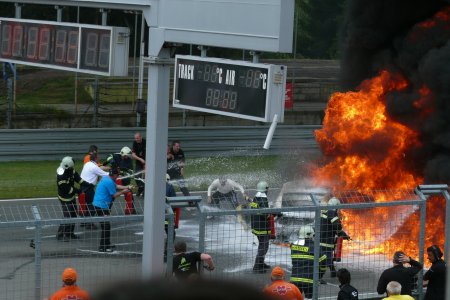
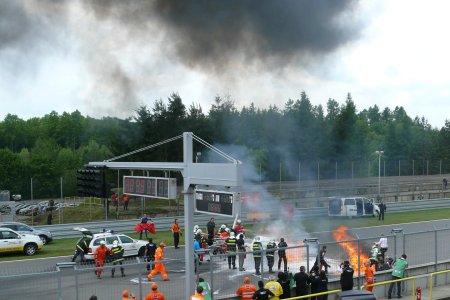
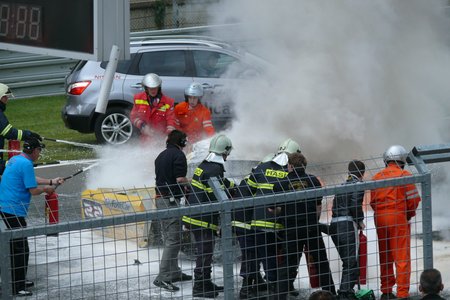
The Saturday's Lamborghini race was never restarted and later it was decided that also both Sunday's races will be cancelled. The reason was a concern about the safety of the fuel tanks; at least we learnt this from unofficial sources. We wish Bertocci all the best and hope to hear soon he is getting better. This event overshadowed the Saturday's program while cancellation of two out of five planned race the next day made the race programme rather sparse on Sunday, there was still plenty of action to watch.
New Championship
The World Championship had its premiere in Brno and also for the Racing Sports Cars team. So what our feelings are? Generally the field was very equal - we had all cars but one in 3.2 seconds - and the cars were very reliable. We also think it was more difficult to overtake in Brno compared to the past. We can say there was a real lack of passing in general - at least for a sports car fan that is used to multiclass races and overtaking and passing all the time, or at least plenty of slow hobby drivers. It was well expressed at the press conference by Michael Krumm, the second driver of a team finishing on the podium, who got the car 11 seconds behind Enge and in another big gap ahead of the next car, so he said that he raced really alone. In fact he was one of those few lucky men that could at least lap the slow Ford GT with a woman drivers at the wheel, in fact the only car that did not finished in the lead lap on Saturday's Qualifying 1-Hour Race.
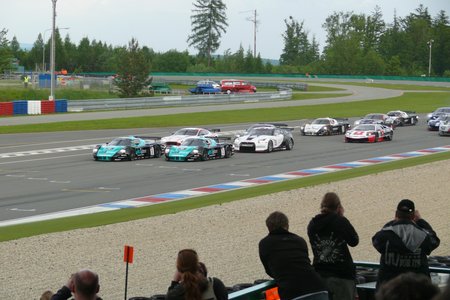
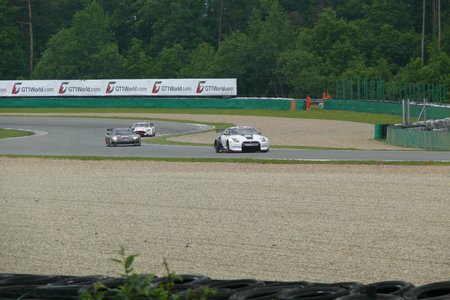

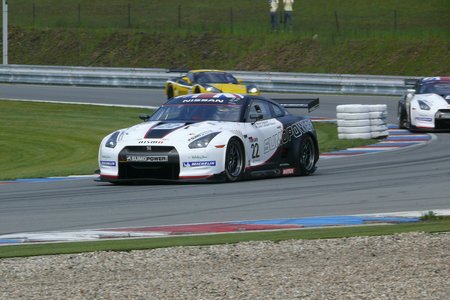
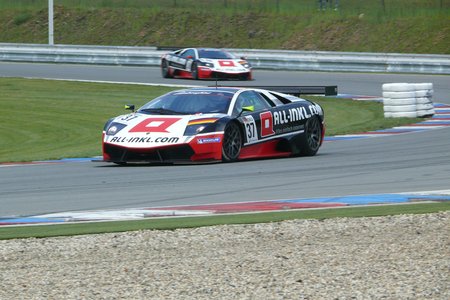
From the reliability and equality point of view it was nice. On the other hand, 23 cars was not really enough for this long track and compared to almost 60 cars we witnessed a couple of weeks ago in Spa for Classic Endurance Racing or 50 for the Le Mans Series, it was very hard to make a group photo in practice session unlike in Belgium. The cars are now matched probably very well. In the Qualifying Race we had all six marques on the top six positions; however it does really say nothing about the quality and performance of the cars. A manufacturer or more likely a team preparing a car for the Championship may produce a really low quality racing machine but with the equalisation process and other procedures this fact would be eliminated. So from our point of view it was really meaningless which car or which make would be faster, it represented really nothing. However it was just good to see that each type of car had at least one really quick squad so there are no teams and drivers in disadvantage as it looked in the first race in Abu Dhabi, when all Nissans were really at the very end of the field.
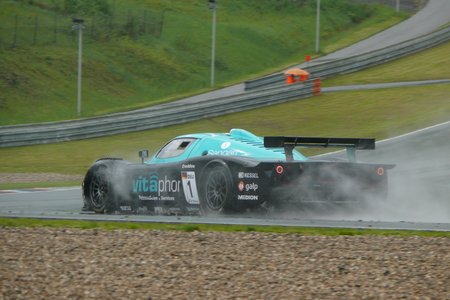
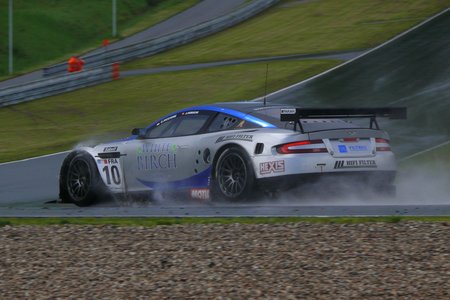
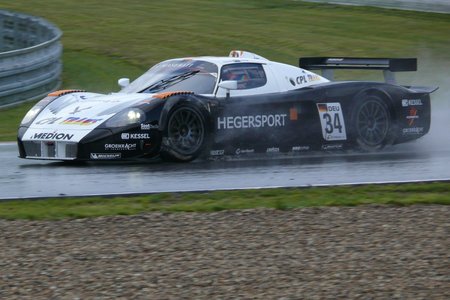
The main race
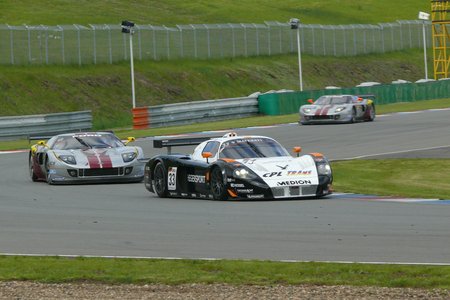
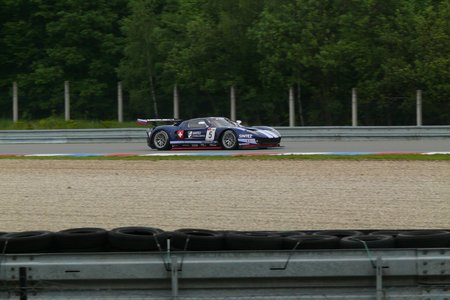
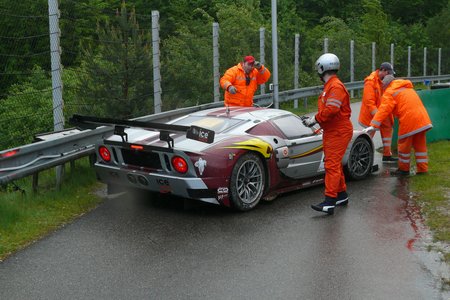
So let us go back to the starting procedure. What we could follow right after the start was a very slow Aston Martin of Tomas Enge, who was passed by more than 10 cars by the first corner and ran 16th at the end of the first lap. It was also evident that Maserati of Bertolini was pulling away the rest of the field much earlier than the race could have been even started. As expected Bertolini was later called in for stop & go penalty, thus losing the lead and also any chance for his co-driver Michael Bartels to repeat a victory from Saturday. While we were afraid there was something wrong with Enge's car, he did not lost any other places since then and even started to gain a few positions. Explanation gave us Enge at the press conference: there was a problem with entire starting procedure. Tomas saw no green lights and a board signalling another formation lap. However the lights went green when visible only for drivers from the second row and behind, while Enge believed there is no race yet. He realised something is strange when the cars made a contact in the first corner, so it would not be another formation lap. Then it took him another three laps to get concentrated for racing again. But common spectators had no idea what was happening with their favourite driver. The race seemed lost for Enge and also for Bartels but NASCAR-like events followed. Two short safety car periods worked well for both Enge and Bartels, who was in the pits waiting for a driver change. Those mandatory pit stops took place just at the end of the second safety car period when most of the field turned to the pit lane, just like we commonly see in NASCAR. All the car were at one pack so it was very important how quick each team would be in the pit lane. Enge with Turner were quickest on Saturday so it was very likely they may return to the race for the win. About six cars decided to pit a lap later which was an obvious strategic error. Since then the field was split into two groups. At front about a dozen cars that pitted under full-course caution followed but the rest more than half lap back. There were also some delayed or retired cars, particularly Mucke's Aston Martin, which had to start from the pit lane after late and unsuccessful attempt to join the starting grid, had a collision with the women Ford GT. Mucke was OK but later retired with a rear wheel hub failure, while Rahel Frey was lost in the gravel. In fact this incident was one of the reasons for calling a safety car. Frey lost a lap or so before being released from the gravel, then she had to pit as a result of this trip off.
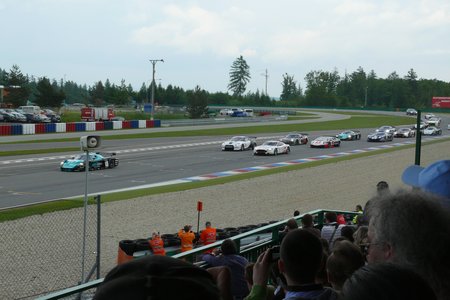
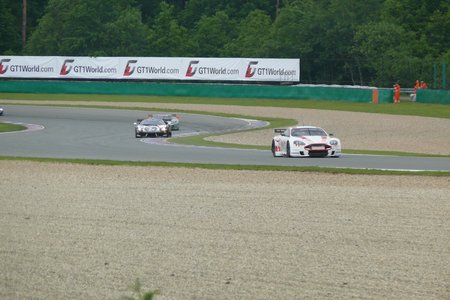
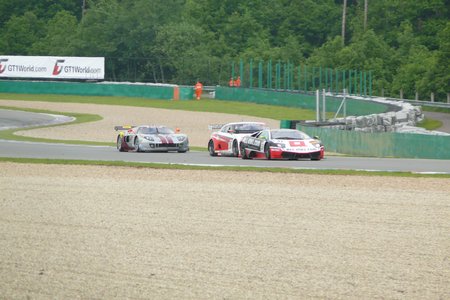
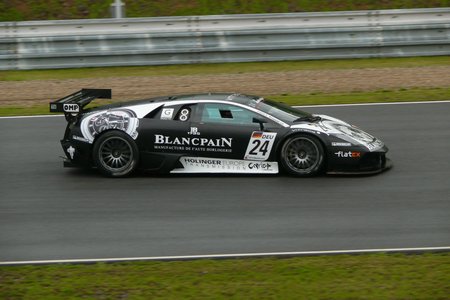
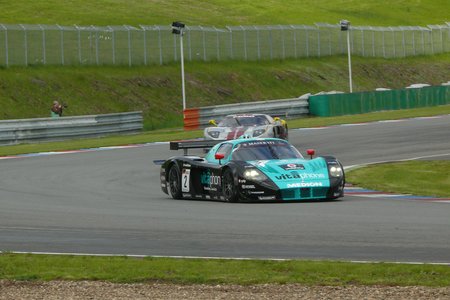
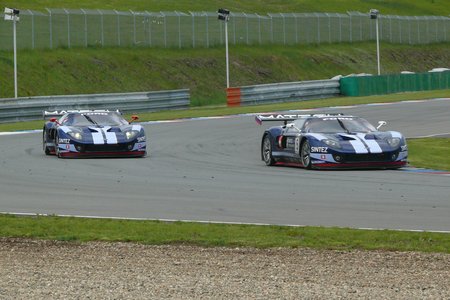
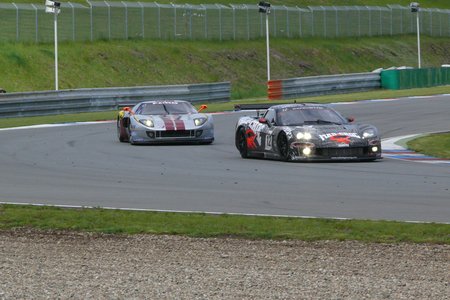
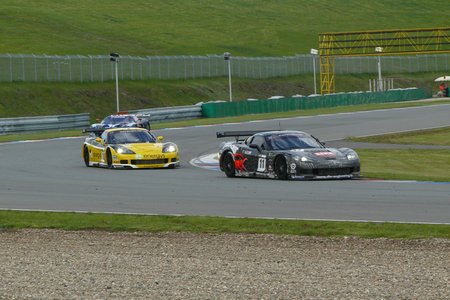
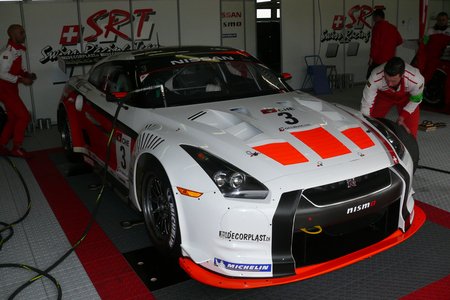
Nissan, which was at the lead before the safety car period pitstops, was replaced by the Ford GT which won the first race of the season. Thomas Mutsch replaced Romain Grosjean at its wheel. Turner, who took over from Enge, took the second place after having the second fastest pit stop of the race and Peter Dumbreck who replaced Micheal Krumm in the fasted Nissan ran third. Despite all cars ran pretty close, there were actually almost mo fights for any positions. They simply ran as wagons on a railway, later being catch by the fourth running Aston Martin entered by Hexis and probably the fastest car driven by Bartels, who was one of very few drivers actually making some progress through overtaking. The team strategy did not work well when the car number 2, which was obviously slower than Bartels number 1 let Bartels in a direct battle for many laps while the front cars ran away. When Bartels overtook his sister car, he then passed by front running Lamborghini a bit easier but he had not enough time to battle with any of the top four. There were no changes in positions at the front after the pit stop and despite the top five cars finished within less than two seconds a real drama was at the higher positions; especially those already mentioned Bartels' battles.
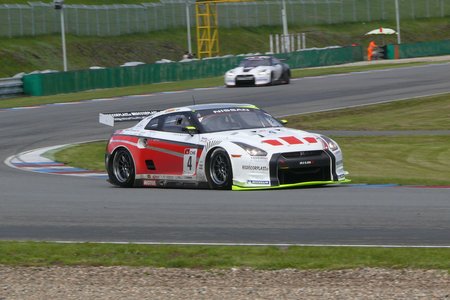
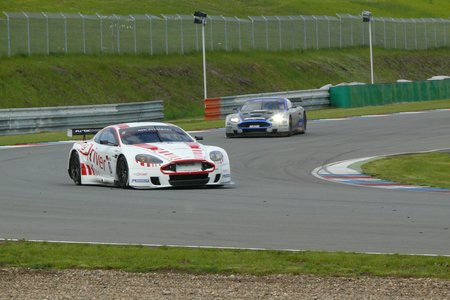
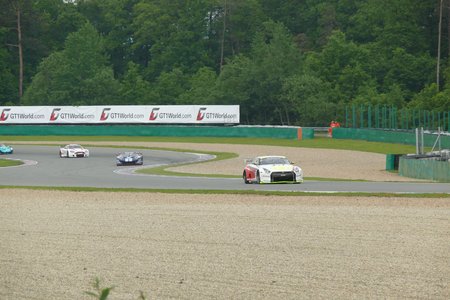
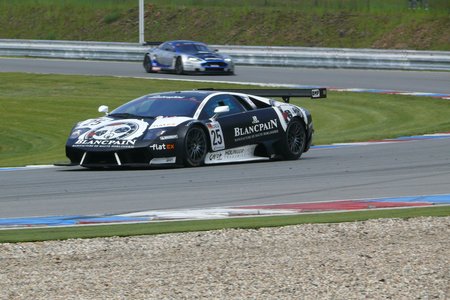
The first FIA GT1 World Championship in Brno was more or less a success. There was a decent crowd, the weather was OK despite rain and storm forecast and the race was eventful and close and the spectators were happy to see their favourite driver on the podium. However Enge was not that happy, he really wished to win here but the second place after such organisers' mistake was really excellent.