Endurance racing is a whole other topic in motorsports. While in Formula 1, the outcome of a race is usually decided in a couple of hours on perfect asphalt, sports car marathons are a true test of survival. The goal sounds simple: cover as much distance as possible in 6, 12, or 24 hours. But in reality, it demands not only speed but also rock-solid reliability and incredible team coordination.
Here, they race in downpours, fog, and pitch darkness. Engines are pushed to the limit day and night, brakes are white-hot, and drivers are literally collapsing from fatigue and lack of sleep.
Over more than a hundred years, from the first races on dusty European dirt roads to the era of modern hybrid hypercars, endurance racing has developed its own breed of racers. For them, simply having good reflexes is not enough. You need to understand engineering, be patient, and focus on the team's success, not just your personal ego. These people have significantly changed the way cars are designed and how we view auto racing in general. Learn details about the main legends of marathons: their paths, their greatest victories, and the mark they left on motorsport.
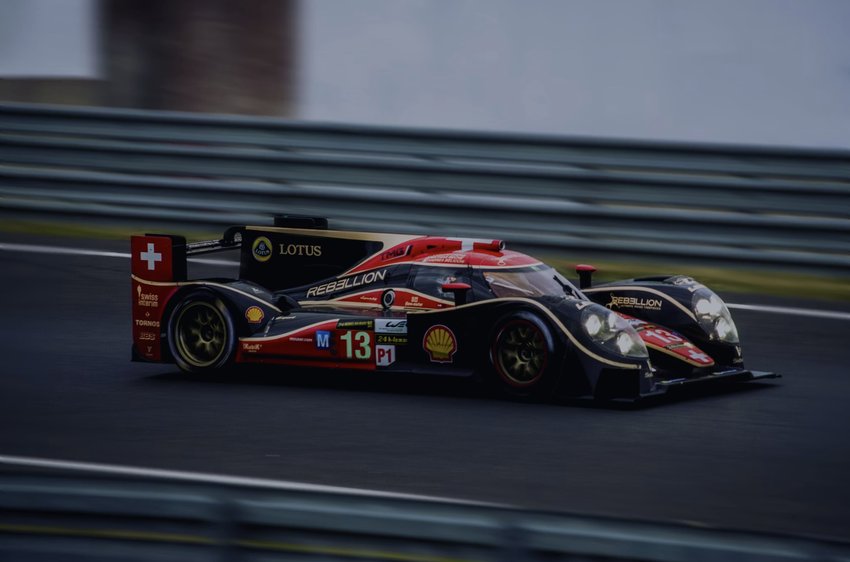
The Age of Pioneers – The Birth of a Myth and the First Heroes
In the first half of the 20th century, racing sports cars was pure madness. No runoff zones, gravel, or modern barriers – ordinary closed roads served as tracks. The cars were heavy, their aerodynamics were brick-like, and their tires were narrow. Simply keeping such a monster on the track required remarkable physical strength and nerves of steel.
Tazio Nuvolari significantly changed the public's attitude toward racing drivers. The Italian, nicknamed the "Flying Mantuan", drove with extreme force and aggression. He was essentially the first to invent the concept of drifting around corners; this kept the revs up, and the car accelerated much faster on exit. His stunt at the Mille Miglia in 1930 went down in history. To sneak up on his main rival, Achille Varzi, and pass him, Nuvolari simply turned off his headlights in the dark before dawn! He also distinguished himself at Le Mans, taking gold in the 1933 24-hour race in an Alfa Romeo 8C 2300. Looking at him, people understood: in the hands of a maniac, a sports car could do things that defied the laws of physics.
Becoming a Legend
In the 1950s, Briton Stirling Moss became a star. True, he never became a Formula 1 champion, for which he is often called the best driver without a title, but in endurance racing, he was simply unrivaled. His greatest triumph was the Mille Miglia, but in 1955, at the wheel of a Mercedes-Benz 300 SLR. Then, his co-driver, Denis Jenkinson, came up with a brilliant idea: he rolled paper with corners marked on it onto a roller; thus the rally "legend" was born. The team ended up racing a thousand miles across Italian roads at an average speed of almost 158 km/h. This record, incidentally, remains unbroken to this day. Driving for ten hours straight at the limit of his abilities through narrow village streets and mountain serpentines after this run, Moss set a completely new bar for endurance for future generations of racers.
It is impossible to understand how big the individuals of that era were without learning more about the challenges they faced. Cars broke down with alarming regularity, which was the reason for drivers to be not only skilled athletes, but also talented test drivers.
The key qualities of the innovative racing drivers of the mid-20th century can be characterized by the following factors:
● Mechanical empathy. The driver's ability to sense the limits of the transmission, engine, and brakes to keep the car running to the finish line in a multi-hour marathon.
● Night driving skills. The ability to navigate the track under dim halogen headlights, relying on memory, instinct, and the silhouettes of trees along the roadside.
● Versatility. The willingness to race a lightweight open-wheel car one weekend and a massive closed sports prototype with a completely different weight distribution the next.
● An intelligent approach to strategy. Understanding that victory in a 24-hour race is achieved not on the first lap, but through consistent lap times and minimizing time spent in pit stops.
These qualities, forged in the crucible of the most dangerous races of the 1950s, became the foundation upon which the subsequent evolution of touring car racing and endurance marathons was built. Drivers learned to conserve their equipment, while lap times steadily increased.
The Golden Age – The 1960s and the Confrontation of Continents
In the 1960s, sports car racing was not just a sport – it was a corporate slaughterhouse. Speeds were skyrocketing: engines were moved behind the driver, and engineers were just beginning to experiment with aerodynamics.
And then Carroll Shelby entered the picture. He won Le Mans in 1959 for Aston Martin, but a heart condition forced him to retire from racing. However, his most exciting career was yet to come. He designed the famous Shelby Cobra, and then Ford commissioned him to perfect the GT40 project, finally giving Ferrari a run for its money.
But it should be mentioned that without Ken Miles, none of this would have happened. This Brit was a mechanical genius, a self-taught engineer, and arguably the best test driver of his time. He literally felt the car in his bones and could translate those feelings into numbers for the engineers. It was Miles who took a crude, heavy, and dangerous Ford GT40 and made it run so hard it wouldn't fall apart in 24 hours.
What happened at Le Mans in '66 is pure tragedy. Miles should have won, but Ford bosses wanted a great photo opportunity at the finish with three cars, and the victory was essentially stolen from him. A couple of months later, Ken crashed during testing. But his meticulous approach to tuning aerodynamics, cooling, and suspension changed motorsport forever.
Monsieur Le Mans And The Birth of Modern Endurance
The late 1960s turned the world of endurance racing upside down. Speeds on Le Mans' Mulsanne Straight, then still free of chicanes, surpassed 350 km/h. Simply keeping monsters like the Porsche 917 and Ferrari 512 on track required drivers with incredible reflexes and nerves of steel. It was against this backdrop that a man emerged who would forever cement his name in the history of 24-hour races.
The Belgian Jacqui Ickx was a truly outstanding pilot. He performed well in Formula 1, but his talent was fully revealed in endurance racing. In 1969, Ickx forced Le Mans organizers to reconsider safety rules. Then the start looked quite risky: the pilots had to run across the track, jump into the cars, and immediately rush forward. Due to the rush, many simply did not wear seat belts. Ickx decided to protest against this. He crossed the starting line at a leisurely pace, calmly got into his Ford GT40, carefully buckled up, and was the last to leave. And what is the result? A day later, he won the marathon, beating his pursuer by only a few tens of meters. It was one of the most tense finishes in motorsport history, and the dangerous runaway start was canceled for the following year.
In the 70s and 80s, Ickx dominated Le Mans and scored a then-record six wins, four of them in Porsche 936 and 956. His main partner was the Briton Derek Bell, another Group C legend. They made up the perfect crew: fast, calm, and not inclined to take unnecessary risks. At the same time, the guys could easily speed up at night or in the rain. Bell won Le Mans five times and was an exemplary teammate. He understood perfectly well that you can't be selfish in daily marathons – the main thing is to save the car and work accurately with the mechanics.
Absolute Record-Breaker – The Tom Christensen Era
For a long time, everyone thought Jacky Ickx's six Le Mans victories were an absolute ceiling, something no one would ever break. But in the late 1990s, Dane Tom Kristensen burst onto the scene and changed everything. It all started almost by accident: in 1997, he was invited at the very last minute to drive a TWR Porsche for the Joest Racing team. The result? A victory in his debut race and a new lap record to boot.
But Kristensen truly blossomed with Audi. Since the early 2000s, the Germans had been tearing Le Mans apart: first with the dominant Audi R8, then with the first diesel, and then with hybrids like the R18 e-tron. Tom fit perfectly into this winning car. He won not only due to his speed, but also thanks to his incredible consistency, his incredible physique, which allowed him to race until a ripe old age, and his cool calculations on the track. Backing Christensen's team back then was a Win Bet – Audi's impeccable engineering and the Dane's skill worked together flawlessly.
Ultimately, Kristensen retired with a stratospheric record: nine overall victories. For this, he was nicknamed "Mr. Le Mans", and he cemented his status as the best marathon driver. Essentially, he witnessed the transition from the analog sports cars of the 1990s to modern computers on wheels. And he proved by example that no matter how much telemetry and electronics are shoved into a car, the most important factor in success is still a human being behind the wheel.
It is very important to get a closer look at the achievements of the greatest riders. Their statistics do not lie.
| Driver Name | Country | 24 Hours of Le Mans Wins | 12 Hours of Sebring Wins | 24 Hours of Daytona Wins | Main Brands in Career |
|---|
| Tom Kristensen | Denmark | 9 | 6 | 0 | Audi, Porsche, Bentley |
| Jacky Ickx | Belgium | 6 | 2 | 0 | Porsche, Ford |
| Derek Bell | United Kingdom | 5 | 0 | 3 | Porsche, Mirage |
| Hurley Haywood | USA | 3 | 2 | 5 | Porsche |
| Henri Pescarolo | France | 4 | 0 | 1 | Matra, Porsche |
Different pilots specialized in different types of marathons, but the best of the best always found a way to the podium on the most challenging tracks on the planet.
American Legends and Transatlantic Success
Understandably, many people associate endurance racing only with Europe and Le Mans. But the United States has developed its own, equally exciting endurance culture. While Le Mans is revered in the Old World, the main 24-hour marathons in America are Daytona and Sebring.
When it comes to American sports car legends, Hurley Haywood is the first to come to mind. He spent his entire career driving Porsches for Brumos Racing, whose red, white, and blue cars are recognizable to any fan. Haywood is the record holder at Daytona, having won the race five times. The track itself is very unique: for part of the lap, you fly along an oval with a huge banking, and then suddenly dive into a twisting infield. Driving there at night is a real challenge, as the blinding glare of the floodlights constantly gives way to the darkness of the infield. Haywood was renowned for his exceptionally smooth driving, which was ideal for handling the edgy and powerful rear-engine Porsches. And he was not just wrecking cars in the US – he won three times at Le Mans.
And who would we be without Mario Andretti? Yes, most know him as a Formula 1 champion and an Indy 500 winner, but he loved sports cars just as much. Mario won at both Daytona and Sebring behind the wheel of a Ferrari. His versatility is astounding: he could equally brilliantly race around an oval in an open-wheel car and wrestle a heavy prototype car on the broken concrete slabs of the old Sebring airfield. This is why he is deservedly considered one of the greatest racing drivers in history.
Motorsports has its own unofficial holy grail for marathon runners: the Triple Crown of sports car racing. To collect it, you need to win three of the toughest endurance races: one French classic and two American stages. Winning at least one of them is already a dream for any driver, and those few who collected all three cups are generally considered motorsport demigods.
These are the three main tests:
● "24 Hours of Le Mans" (France). The oldest and most prestigious race on the planet. The Sarthe circuit is tricky: half of it consists of ordinary country roads. Because of this, engineers have to rack their brains over the settings. The car needs insane top speed to fly down long straights, but also great grip for fast corners.
● "24 Hours of Daytona" (USA). Winter Marathon in Florida, which usually opens the season. They race on the so-called "Roval" – a wild mixture of a classic American oval and a regular road track. The toughest thing here is the long 13-hour night and the crazy loads on the tires and suspension as the cars rush along the inclined track walls (bankings).
● "12 Hours of Sebring" (USA). It would seem that the journey is half as long, but the race takes place on the slabs of an old military airfield. The concrete there is so broken and uneven that racers often repeat: "Sebring destroys a car in 12 hours more than Le Mans does in 24 hours". This is a real test of whether the chassis will crumble on the road and whether the pilot's spine will withstand it.
Victory in even one of these races forever etches a driver's name into the annals of history. And those few who conquer all three summits become immortal legends.
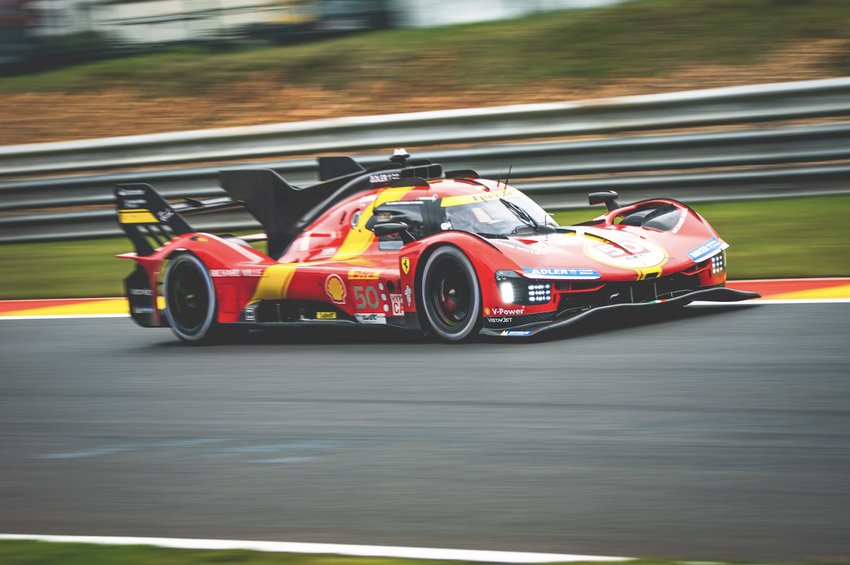
The Legacy and Modern Era of Hypercars
Endurance racing is currently experiencing an unprecedented boom. Thanks to the new Hypercar (LMH) and LMDh classes, they have brought back the major auto giants to the track: Ferrari, Porsche, Toyota, Peugeot, Cadillac, BMW, and Alpine.
Today's sports prototypes are more like spaceships. They are powered by sophisticated hybrid Hypercar powertrains producing nearly 700 horsepower while maintaining maximum fuel economy. The driver has a tough time in the cockpit: literally before every turn, they press dozens of buttons on the steering wheel to adjust the brake balance, recuperation, and differential settings on the fly.
But technology is technology; the essence of racing remains the same. To win, crewmates need to understand each other perfectly. Drivers are battered by the G-forces, but they need to keep a cool head, dodge slower GT cars at night, and, most importantly, manage not to destroy their vehicles before the finish. Past icons like Nuvolari, Moss, Miles, Ickx, Bell, Haywood, and Christensen did not race just for the cups. They were the ones who pushed the entire automotive industry forward. Disc brakes, wings, modern headlights, and even hybrids, all of these were perfected through their nerves and talent in punishing, multi-hour marathons. This drive and tenacity have not disappeared; they are still in the blood of motorsport, inspiring new generations of drivers to take to the starting line of the world's toughest races.