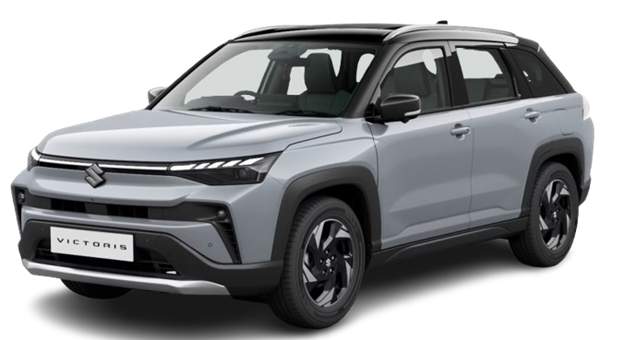
The Indian SUV market is undergoing a gradual but significant transition in how buyers think about powertrains. While petrol and diesel engines continue to dominate sales, hybrid technology is gaining attention as buyers look for alternatives that balance efficiency, usability, and long-term cost considerations. Within this evolving landscape, the Maruti Victoris offers a useful lens through which to understand why hybrid SUVs are becoming increasingly relevant in India.
Rather than replacing conventional powertrains outright, hybrids are emerging as a practical middle ground for buyers who want better efficiency without the behavioural changes required by fully electric vehicles.
Why Hybrid SUVs Are Gaining Relevance
Hybrid SUVs address several challenges faced by Indian buyers. Rising fuel costs, increasing urban congestion, and growing awareness around emissions have made efficiency a more prominent consideration in purchase decisions. At the same time, inconsistent charging infrastructure continues to limit the practicality of electric vehicles for many users.
Hybrids respond to this gap by combining an internal combustion engine with electric assistance, improving fuel efficiency without requiring external charging in most cases. For buyers who want lower running costs but are not ready to shift entirely to EVs, this technology offers a familiar and flexible solution.
Changing Buyer Expectations in the SUV Segment
SUV buyers today expect more than size and road presence. Modern expectations include:
● Reduced fuel consumption in city traffic
● Smooth and quiet driving in stop-start conditions
● Minimal compromise on highway performance
● Predictable long-term ownership costs
Hybrid systems are well suited to these requirements, particularly in urban environments where frequent braking and low-speed driving allow electric assistance to contribute meaningfully.
The Maruti Victoris reflects this shift by offering hybrid options alongside conventional powertrains, allowing buyers to choose based on usage patterns rather than segment labels.
Hybrids as a Bridge Between ICE and EVs
One of the reasons hybrid SUVs are gaining traction is their role as a transitional technology. Unlike electric vehicles, hybrids do not require buyers to change refuelling habits or plan charging infrastructure. At the same time, they introduce drivers to electric propulsion benefits such as smoother acceleration and improved efficiency.
For Indian buyers who:
● Live in mixed urban--semi-urban environments
● Travel long distances occasionally
● Want efficiency without range anxiety
hybrids often feel like a safer and more practical step forward.
How the Victoris Fits into This Trend
The Maruti Victoris is positioned as a balanced mid-size SUV rather than a niche efficiency-focused product. Its hybrid powertrain option aligns with buyers who want improved fuel economy without sacrificing everyday usability or highway capability.
This positioning matters because hybrid SUVs are not purchased purely for environmental reasons. According to the U.S. Department of Energy, hybrid electric vehicles use regenerative braking and electric motor assistance to optimize efficiency, particularly in stop-and-go traffic where conventional engines are least efficient. Buyers often evaluate them on:
● Overall driving experience
● Ease of ownership
● Maintenance predictability
● Long-term cost benefits
By integrating hybrid technology into a mainstream SUV format, the Victoris reflects how hybrids are moving into the centre of buyer consideration rather than remaining an edge case.
Cost Considerations and Ownership Perspective
From a value perspective, hybrid SUVs are often assessed on total cost of ownership rather than upfront price alone. While hybrid systems may carry a higher initial cost, potential savings through improved fuel efficiency can offset this over time, especially for city-heavy usage.
Buyers researching such trade-offs increasingly rely on online tools and comparisons before visiting dealerships. On platforms such as ACKO Drive, which enable users to buy cars online while also offering expert reviews and structured comparisons, hybrid SUVs like the Victoris are often evaluated based on real-world efficiency and ownership suitability rather than headline mileage figures.
This reflects a broader trend towards informed, cost-aware decision-making.
Policy, Regulation, and Urban Use
India's regulatory environment has also contributed to renewed interest in hybrids. Recent market analysis shows that hybrid vehicle sales in India more than doubled in the first quarter of FY2026, with strong-hybrid electric vehicles increasing from approximately 12.111 units to 26.460 units year-over-year, driven by government policy changes including tax waivers in states like Uttar Pradesh.
While policy support has largely focused on electric vehicles, hybrids continue to benefit indirectly in urban areas where efficiency and emissions compliance are increasingly important. For buyers in cities facing congestion charges, stricter emission norms, or rising fuel expenses, hybrid SUVs provide a way to adapt without fully committing to electrification.
Limitations Buyers Still Consider
Despite their advantages, hybrids are not a universal solution. Buyers remain cautious about:
● Higher upfront costs compared to standard petrol variants
● Complexity of dual power systems
● Long-term servicing clarity
As a result, hybrid SUVs tend to appeal most to buyers who prioritise efficiency and smoothness over outright performance or lowest purchase price.
What This Means for the Indian SUV Market
The growing presence of hybrid SUVs suggests that the market is not moving in a single direction. Instead, it is expanding to accommodate multiple powertrain preferences simultaneously.
The Maruti Victoris illustrates how hybrids are becoming part of mainstream SUV line-ups rather than specialist offerings. This normalisation is likely to increase buyer confidence and broaden adoption over time.
Conclusion
The Maruti Victoris highlights why hybrid SUVs are becoming an important part of India's evolving automotive landscape. By offering a balance between efficiency, usability, and familiarity, hybrids address many of the concerns that buyers face when choosing between conventional and electric vehicles.
As fuel costs rise and urban driving conditions become more demanding, hybrid SUVs are likely to gain further relevance. For buyers seeking a practical step towards efficiency without major lifestyle adjustments, vehicles like the Victoris reflect a growing and meaningful shift in how SUVs are being evaluated in India.