You come into a weekend with the fastest car on the grid, your drivers starting first and third, your championship leader on a five race winning streak, and you leave with Russell second, Antonelli in the garage, and a 41 point lead that felt like a comfortable cushion on Saturday night and feels considerably less comfortable on Sunday evening. That is Barcelona 2026 in a sentence for Mercedes, and it hurts in the particular way that only racing can hurt, where you did not do enough wrong to deserve what happened but it happened anyway. The result also serves as a reminder that even the most confident Formula 1 expert picks and predictions can be overturned by the chaos and unpredictability that define racing.
George Russell was exceptional this weekend. Let us start there because it is important and it tends to get lost in the noise around Hamilton's win and Antonelli's retirement. Russell took pole position on Saturday by 0.064 seconds, his second pole of the season, and described it afterwards as feeling like his old self again. That matters because the narrative around Russell in 2025 and the early part of 2026 has been uncomfortable, a driver clearly capable of winning championships being slightly outrun by his teenager teammate in the same car. Pole in Barcelona was a statement.
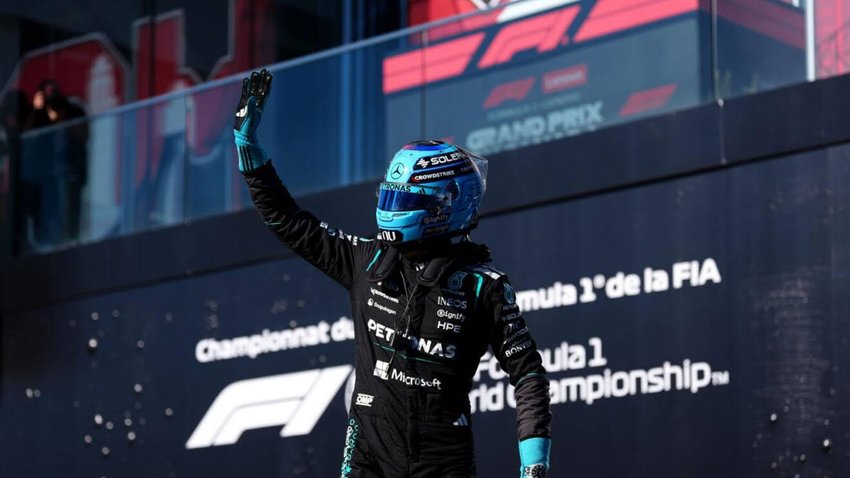
The race itself was not quite what he needed. Hamilton, starting second, stayed glued to his rear for the opening stint. Ferrari's choice to start on softs while Mercedes went mediums looked like it might backfire initially, but the strategy team in Maranello had clearly done the math on a three stop race. When Alonso stopped at Turn 9 on lap 41 and the Virtual Safety Car came out, Hamilton pitted and rejoined two seconds ahead of Russell. From that point the Ferrari was simply faster on fresher rubber and Russell, on older hard tyres, could not respond.
It was a similar story when you look at the pace data. Once Hamilton had that free stop and came out with fresh tyres, Russell had no answer. He was not slow, he was not making mistakes, the car just could not match what Ferrari produced in the final twenty laps with Hamilton in full flow. Russell described Hamilton's pace as "insane" afterwards and added "they're coming," which sums up a situation that Mercedes will need to address before the next round in Austria.
Then came lap 62. Antonelli, who had been running second after passing Russell in the closing stages, suffered an electrical shutdown on the run out of Turn 6. Just like that, 18 points that the team effectively already had in the bag were gone. Russell inherited second place, which is a silver lining of sorts, but the team as a whole walks away from Barcelona having scored 18 points when it looked like they were heading for a 43 point weekend. That is a 25 point swing in a single afternoon, and it is the kind of thing that keeps a team principal awake on a Sunday night.
Antonelli's retirement is his first of the season. He arrived in Barcelona having won five consecutive races, with a 66 point lead, and every indication that the title was his to lose. He now leads by 41 points. More worrying for the Mercedes camp is perhaps the position of Russell, who sits just 9 points behind Hamilton in third. The internal dynamic of the team is now genuinely complicated in a way it was not when Antonelli was dominant and Russell was struggling. If both cars score consistently from here, that is fine. If one of them starts pushing for position the other needs and the team has to manage it, that becomes a conversation nobody at Mercedes particularly wants to have in public.
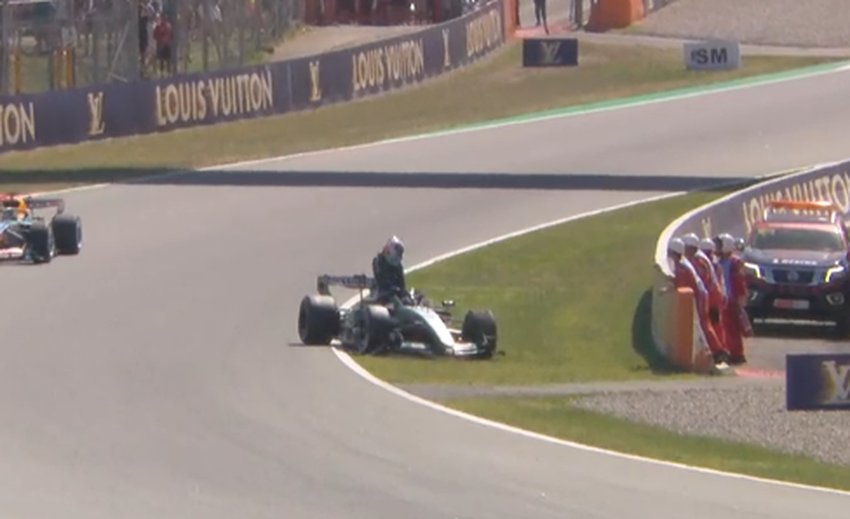
Reliability is also suddenly a question. This was the second DNF for a works Mercedes car this season, following Russell's own retirement in Canada. That is not a crisis, but two retirements in seven rounds is enough to take note of, especially in a year where the car has generally been the most reliable as well as the quickest. The electrical shutdown that stopped Antonelli needs a clear explanation and a clear fix before Austria. The team will find one, they always do, but it adds a layer of pressure to a week that should have been about celebrating what has been an extraordinary start to 2026.
What Mercedes cannot do is panic. The car is still the best in the field. Antonelli is still leading the championship. Russell is back in the title fight in a very real sense. And Barcelona, painful as it was, gave them useful data on how Ferrari are going to try to beat them for the rest of the season, short stints, flexible strategy, and using the VSC window when it opens. They know the threat now. They will prepare accordingly.
Hamilton's radio at the end was moving. "To the fans, thank you for continuing to remind me who I am." For Mercedes fans it was a bittersweet line to listen to, a reminder that the man they watched win six of his seven championships is now making history against them rather than with them. On another day, on a street circuit or somewhere the VSC never comes, the result might have been different. Russell might have held on. Antonelli might have finished second. The 66 point lead might have stayed 66 points.
But Formula 1 does not give you the race on another day. It gives you the one on Sunday.
And on Sunday in Barcelona, Russell drove brilliantly, Antonelli was cruelly denied, and a 41 year old in a red car reminded everyone that experience and racecraft and the ability to manage tyres over sixty six laps in fifty degree heat still matter more than almost anything else. Mercedes will come back. They almost certainly will. But it is going to be a proper fight from here, and that is something nobody at Brackley would have predicted when they arrived in Spain on Thursday morning.
The fight is on. And it is going to be something to watch.