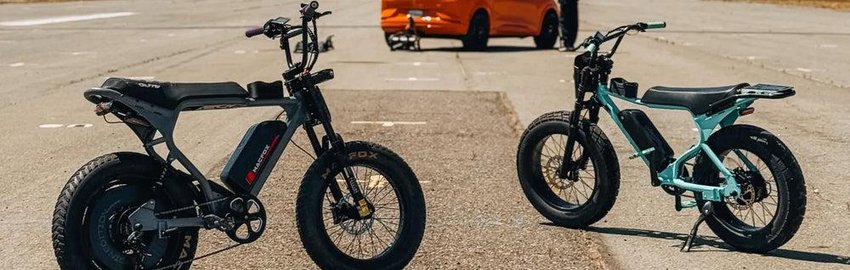
For many racing fans, the best part of a race weekend is obvious: the sound, the speed, the paddock energy, and the chance to see cars from more than one angle. But once you arrive at a large motorsport venue, another question starts to matter quickly: how are you actually going to move around all day?
The walk from parking to the gate, from one viewing area to another, from a photo spot to food or water, and then back toward a campsite or car club area can add up fast. At endurance races, vintage weekends, club events, and large road-course gatherings, the venue can feel much bigger than it looked on the map.
That is why race weekend mobility is not just a convenience detail. It affects how much of the event you can see, how quickly you can change locations, how easily you can carry your gear, and how much energy you still have when the best sessions begin.
What Actually Wears You Out on Race Weekend Is Often the Walking
A racetrack is not laid out like a typical stadium. Instead of one central bowl with seats, concessions, and exits nearby, a road course or large speedway spreads activity across parking areas, grandstands, paddock zones, camping spaces, spectator hills, food areas, and long perimeter paths.
The schedule also changes how people move. You might want to watch morning practice from one corner, walk toward the main straight for qualifying, grab water between sessions, meet friends near a car corral, and then move again for the start of the race. By the end of the day, the route is rarely a simple walk from point A to point B. It is a loop of repeated small trips.
Add a camera bag, a folding chair, sunscreen, rain gear, a scanner, or small tools, and walking becomes more tiring. Heat, pavement glare, crowded crossings, and temporary closures can make short distances feel longer than expected.
That is why experienced fans often plan mobility before they plan every photo angle.
Large Tracks Are More Complicated Than They Look on a Map
Venue maps usually show gates, parking, seating, restrooms, and concessions. What they do not always show is how movement works in real time.
Some roads are staff-only. Some crossings close during active sessions. Some areas that look close on a map may be separated by fencing, grass banks, service roads, bridges, or restricted zones. During major events, crowd flow can also slow down a route that seemed easy in the morning.
For trackside photographers, this matters even more. Light, backgrounds, and car position can make one corner better at a specific time of day. If it takes too long to move, the shot may be gone by the time you arrive. For regular fans, better movement also means a fuller race weekend, because you can experience more than one viewpoint instead of staying in one place all day.
A more realistic way to judge any mobility plan is to ask:
● Can this route be done consistently?
● Will the ride or walk drain too much energy?
● Can I carry the gear I actually need?
● Will gravel, grass, temporary parking, or small slopes make control harder?
● Does the event allow this type of tool in the area where I plan to use it?
Those questions matter more than speed. Race weekend mobility should feel stable, simple, and controlled.
What Fans, Photographers, and Light-Crew Helpers Need
Different people arrive at a racetrack with different movement needs.
A general spectator usually wants to reduce wasted walking. If the trip from the car to the gate, from the gate to the viewing area, and from the viewing area to concessions feels easier, the whole day runs smoother. The tool does not need to be complicated. It needs to be reliable, easy to park, and easy to control.
A photographer values flexibility. Moving between several shooting locations with a camera body, lenses, water, and weather protection is very different from walking empty-handed. The right mobility choice should save energy without creating another piece of gear to manage.
Car club members, friends of teams, and light-crew helpers may move between camping areas, parking lots, club displays, and spectator zones throughout the day. They may not be working inside an official pit lane, but they still deal with quick check-ins, supply runs, and route changes. For them, a short-distance tool that works in open, permitted areas can be more practical than repeatedly driving or walking long stretches.
How to Choose a Short-Distance Tool After You Park
For race weekends, the best mobility tool is not the fastest one. It is the one that fits what happens after you park.
A regular bicycle can solve part of the distance problem, but long riding can still be tiring if the venue has hills, gravel, grass parking, or long outer roads. A scooter may be light, but it usually depends more on smooth pavement. Walking is simple, but it is also the easiest way to lose time and energy before the main event.
When event rules allow it, an electric bike can be a balanced option. The rider still has to choose the right route, control speed, and watch for foot traffic, but pedal assistance can reduce fatigue during longer venue-to-venue movement. It becomes especially useful around parking areas, camping zones, outer access roads, and multiple viewing points.
The key is not top speed. Around a race venue, there are people, cars, staff vehicles, temporary structures, and changing traffic patterns. Stability, braking feel, low-speed control, range, and easy parking matter more than going fast. The goal is to make the day smoother, not to turn the spectator area into another track.
Where a Fat-Tire Ebike Makes Sense Around a Race Venue
Many major race venues have paved core areas, but the edges of the event are often less polished. Parking lots may be grass or gravel. Camping areas can have uneven ground. Outer access roads may be old asphalt, packed dirt, or mixed surfaces. Rain can make a simple path feel rougher by the afternoon.
In that setting, a fat tire ebike is not about off-roading. It is about a more planted feel on imperfect ground. Wider tires can make low-speed riding feel steadier across gravel, grass edges, rough pavement, and temporary parking areas. That can be useful when the rider is moving through open, legal, low-speed spaces rather than trying to push into restricted zones.
That distinction is important. A fat-tire setup does not give anyone permission to enter the track, cut through closed areas, ride through the paddock without approval, or ignore staff directions. It simply makes certain open-area routes easier to handle when the surface is not perfectly smooth.
Check the Venue Rules, Speed Limits, and Parking Boundaries
In the United States, personal mobility rules at motorsport venues can vary a lot. A low-speed electric bicycle may be defined by pedals, motor power, and speed limits, but whether it can be used at a race event depends on state rules, event rules, and the venue's own policies.
Some tracks may allow bicycles on perimeter access roads at low speed while banning riding in the paddock or on-track areas: Las Vegas Motor Speedway's fan policies, for instance, permit e-bikes only if they keep working pedals and stay under 15 mph, while e-scooters are banned outright. Other major events may keep bicycles, scooters, and similar devices outside the admission gates and provide dedicated parking near specific entrances. In other words, whether you can ride, where you can ride, and whether you must walk the bike through certain spaces all depends on that event.
Before race day, check the venue website, event guide, parking map, and spectator rules. After arrival, follow posted signs and staff direction. Avoid fast riding near gates, grandstand paths, food lines, fan zones, paddock entrances, and crowded crossings. When the area is busy, walking the bike is often the better choice.
Parking also matters. Bring a lock, avoid blocking walkways, stay clear of emergency lanes, and do not leave a bike where staff vehicles or pedestrians need to move. The best mobility plan helps you move better without making the venue harder for everyone else.
Keep Your Energy for the Racing
The main reason to plan race weekend mobility is not to make the bike the focus. The focus is still the racing: the sound of the field, the braking zones, the pit strategy, the changing light, the cars, and the people around them.
If your plan is to sit in one small viewing area for the whole day, walking may be enough. But if you want to move between large parking areas, camping zones, club displays, outer viewing points, and different corners of a big venue, a steadier short-distance option can make the day feel less draining.
For fans, photographers, and race weekend regulars, better mobility is about reducing wasted effort. Plan the route, respect the rules, choose a tool that fits the surface, and keep your attention where it belongs: on the cars, the track, and the weekend itself.