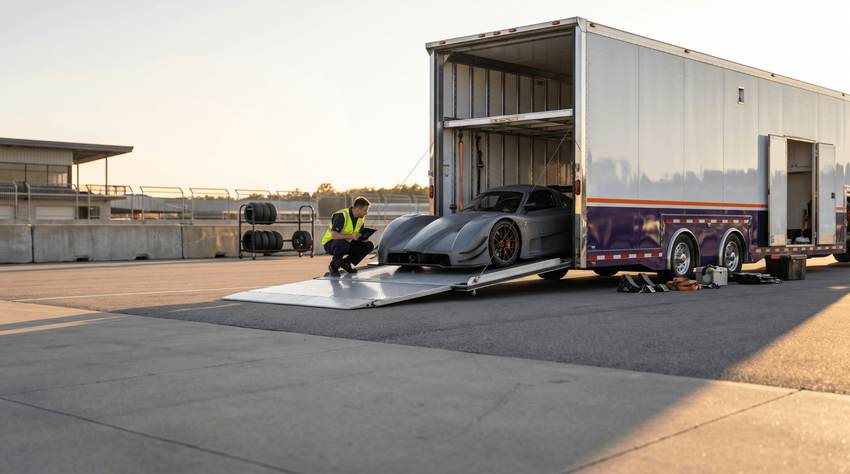
Most people look at a stripped down track car and assume shipping it will be cheap just because it barely weighs anything. That is the quickest way to end up with a car stuck at a local shop while your expensive track day passes you by completely. Shipping a race car is not just about buying miles on a highway from one state to another. It is about buying highly specific trailer space and actual labor time. You are paying for a driver who knows how to handle non standard vehicles without destroying the front aero or burning up a racing clutch. If you are setting up a move for the 2026 season.. you have to look past the normal auto transport rules and understand how this side of the industry actually operates. The entire system is built on matching specific trucks with very specific loading needs.
Why a race car doesn't load like a normal street car
Everyone worries about the long highway drive and what the weather will be like out on the road. But for a race car the most dangerous part of the entire move is often the first twenty minutes just trying to get it safely onto the trailer. A normal daily driver road car simply drives up a set of metal ramps without a second thought. A track car is a completely different story. It usually has a front splitter that practically scrapes the asphalt just sitting still. It might have slick tires that spin endlessly on wet metal ramps, a steering rack with almost no turning radius, or it simply cant start on its own.
If the transport dispatcher doesn't know the exact ground clearance or the fact that the chassis needs a winch, everything just grinds to a halt. You can't force a low ground clearance car onto a standard steep auto trailer without cracking expensive carbon fiber or getting the car high centered. Loading takes time and highly specific equipment like extended race ramps or hydraulic liftgates. This directly affects reliability because loading complications will either delay the driver for hours or force them to reject the pickup completely right on the spot.
The truth behind enclosed equipment availability
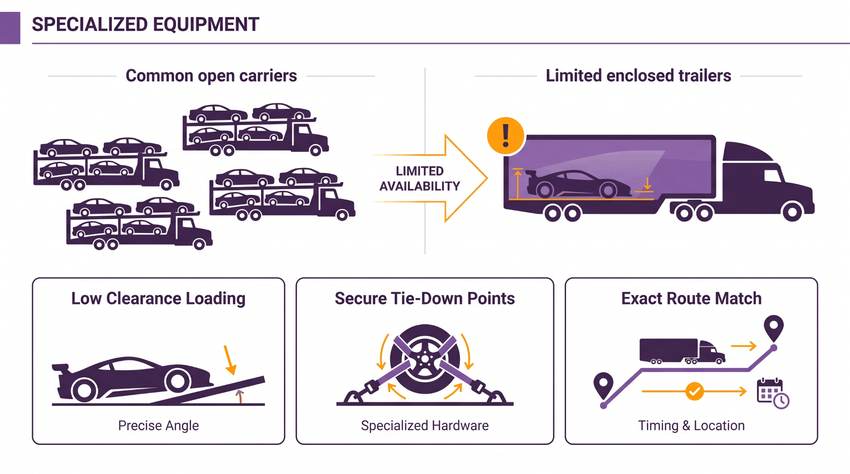
A lot of guys request enclosed car transport just because they want to keep track debris, rain, and road dirt off the paint. Keeping the car perfectly clean is nice but enclosed transport is usually mandatory just to get the correct loading equipment and securement points. These trailers are built specifically for low clearance racing machines, prototypes, and high value vintage cars. They control the exposure to the elements and keep wandering eyes away at truck stops.
Here is the problem that people run into though. There are way fewer enclosed trailers running out on the highway compared to the thousands of standard open carriers. Because this specialized equipment is scarce, the capacity is always very tight in the market. You are waiting for a very specific type of truck to have an empty slot while driving in your exact required direction. Enclosed transport costs more because the equipment is harder to find, and it means your pickup window usually takes longer to schedule. The speed of finding a truck depends entirely on what is already rolling through your state.
What actually controls your delivery timeline
If you have a testing day at Sebring on a Thursday afternoon you might think you just tell the carrier to be there on Wednesday morning. It sounds simple. Truck drivers don't just ignore federal safety laws to make your track day. Government rules strictly limit exactly how many hours a driver can be behind the wheel every single day. Once they hit their legal drive limit they are required by law to pull over and sleep for ten hours.
On top of that the truck dispatcher is not just sending a ninety foot rig for your one single car. They are constantly building a puzzle of a route. Major transport lanes between big motorsport hubs usually move a lot faster because the carrier can combine multiple race car loads together efficiently. If your private track or shop is out in the middle of a rural area.. it adds deadhead miles to the route. The truck has to drive completely empty just to reach you, which throws off their entire timing schedule. Traffic congestion and bad weather only make those transit delays worse.
How event deadlines completely change the price
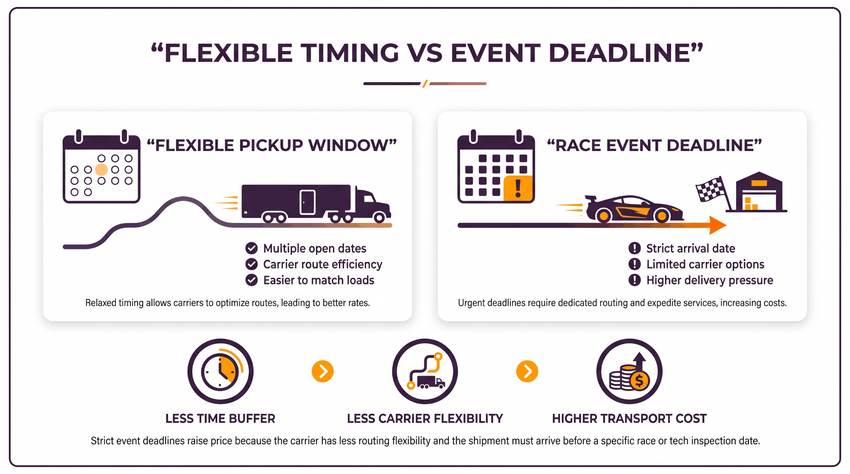
Standard car shipping heavily relies on time flexibility. A regular customer might give a transport company a flexible five day window to pick up a regular SUV because they are not in a rush. With a race car you almost always have a hard, unmoving event deadline. You need the car in the paddock before tech inspection opens.
Tight event deadlines raise the shipping price heavily because they completely eliminate the dispatchers flexibility. The carrier has to fit your car into an efficient route exactly when you demand it, no matter what fuel costs or detour miles look like. More time buffer means fewer missed event problems. Auto transporters and transport brokers like Rivalane Auto Transport understands this reality completely and prices the shipment based on what it actually takes to secure a reliable truck for a strict date. If you just chase the cheapest quote you find on the internet, your car will probably sit at the shop because no real driver is going to accept a low paying job with a strict, stressful deadline.
Why short local moves are surprisingly difficult to book
It seems logical that moving a chassis fifty miles across town to a fabrication shop should be incredibly fast and dirt cheap. In reality short track to shop moves are sometimes the most frustrating jobs to cover. Highway carriers make their money on running long interstate miles and keeping every spot on the trailer full for days at a time.
If you ask a massive enclosed auto hauler to break away from a long profitable interstate run just to move your car one county over, they are going to lose money on missed highway miles. This is exactly why you often end up waiting days for a very short move. It usually only gets picked up when a local driver happens to have an empty spot and needs to fill a few hours of unexpected downtime. Urban traffic congestion just adds time cost for the driver, making them even less likely to grab a short run that barely pays enough to cover their daily diesel fuel expenses.
The hidden risks of fuel cells and cargo securement
Strapping down a normal street car is a pretty basic routine for most truck drivers. Strapping down a dedicated track car takes actual thought and experience. A regular auto transport driver might try to throw traditional over the tire straps on a vehicle that has barely half an inch of wheel well clearance. Race cars are incredibly strong on the track but they are actually quite fragile in areas where regular cars are thick and durable. You need a driver who understands soft straps, wheel nets, and proper chassis tie down points.
You also have to deal with the reality of non standard fuel setups. Poor disclosure about unusual lithium battery setups or a race fuel cell can cause a driver to flat out refuse the load right on the ramp. Its a massive safety issue for the carrier. You have to tell the transport provider exactly what mechanical and chemical hazards they are dealing with before the truck ever pulls up to the shop. Clear preparation lowers the compliance risk and makes sure the driver actually knows how to secure the car safely.
Final thoughts on moving your car
Moving a dedicated track car across the state or across the country is just an exercise in matching the exact right machine with the right truck. Attempting to hide clearance issues or demanding a perfect timeline on a cheap budget usually just ends with a lot of frustration and missed track time. If you understand what the truck driver is actually dealing with on the road and give the dispatchers accurate vehicle details upfront, the whole movement process gets significantly smoother.