Introduction - entry and support races
Le Mans Series championship has been growing each year since its inception in 2004. Last year, we in RacingSportsCars took the challenge and started to focus on this championship after arrival of factory Peugeot and entertaining live TV coverage by Motors TV. Having been at Spa last year, we continue to return back here for the 1000 kilometres race at the Belgian track near Spa, where long distance races have a long tradition. Not only the 1000 kms race, which was held for the first time forty two years ago, but also equally famous 24-hour race, which was established in 1924, only one year after the classic Le Mans 24 hour race had seen the light of the day for the first time. Unlike last year, when the Spa race was scheduled in the middle of August, this time the greatest sports cars found their way to Spa in the first half of May. Considerig excellent weather condition, it was probably wise move in the calendar, at least it worked this year. Sunny all the time, temperatures usually about 20 Celsia grades, no signs of rain. At least on Friday with the same forecast for the coming weekend.
This year the Le Mans Series consists only of five races. The Spa race was the third one, following relatively closely Barcelona and Monza races, both of which were won by Peugeot. But in Monza, at least, it could hardly be considered a Peugeot domination since the works Audi lost the victory only after a collision with the second running Peugeot that had already been 'awarded' stop and go penalty but the Audi driver was not aware of it. This year, after a new factory team joined the championship, it might be considered the best racing series of the last two decades. Well, we like real endurance races and we like sports car races. And in this realm there was hardly anything better since the demise of group C. So as long as the series continues in this mode, it would remain our main focus. The next series race at the Nürburgring is also on our schedule.
Continuous debates regarding petrol versus diesel performance, which we usually disagree with, were almost resolved by Panis in Friday's second practice session when he in a Oreca car that has only 'two-race long' develoment appeared among two factory Audis, well less then one and half second off pace of the better of the two Peugeots. Opponents of the current performation ratio between diesels and petrols should take into account the difference between a factory team and a privateers and also between manufacturer-developed car versus independent team-developed car. If we take a Group C racing of the 80s as a reference, we have to admit that the differences between works and private teams were comparable as today and if we considered the privateers ran Porsches 956/962, which would be the same as if they raced 908s or R10s today, we should compare current Pescarolos, Orecas, Creations etc. with those old Nimrods, Cougars, Rondeaus or Zakspeeds. Then we would find that the differences between factory-developed and privately-developed cars were actually much larger back then. So we are happy with the ballance though we would surely prefered more competition to Peugeots. But let's try to stay unbiased.
The quality of the entry went higher compared to the last year, the professionality level of the series increased but overall number of cars was noticeable down compared to the last year's race. Provisional entry list numbers descreased from 55 to only 47 cars while actual number of cars present on the track was down from 50 last year to 44 this year. Fortunately we lost mainly cars in the GT categories, moreover the prototype numbers were down by two cars, which were destroyed in previous race in Monza. Creation-AIM with Campbell-Walter and a second Courage-Oreca with Stephane Ortelli had to stay outside the Spa race weekend after their heavy accidents two weeks ago.
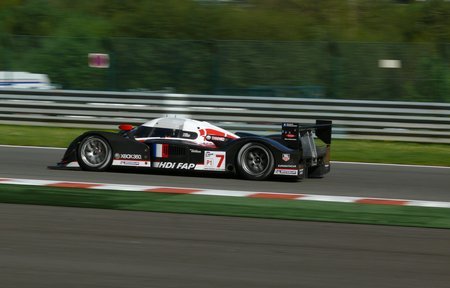
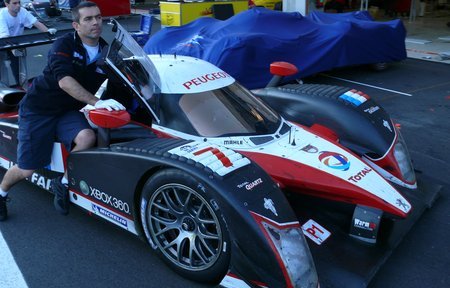
As the Le Mans Series grew this year, related facilities and accessories occupied much more space in the paddock area, so we had also less support races compared to last year. Formula Renault and Porsche Carrera Cup France were gone completely, while Peugeot Spider Cup was replaced by less spectacular Catherham cup but most exciting support races, Radical Cup and especially Classis Endurance Racing (CER) return back.
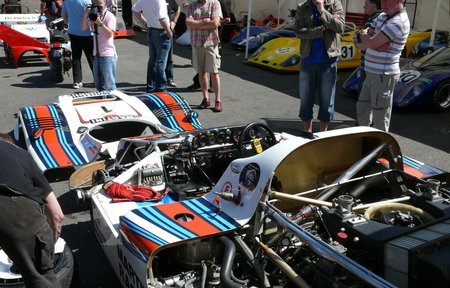
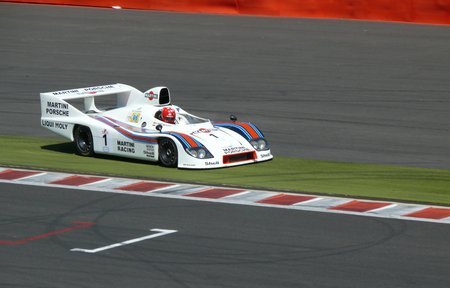
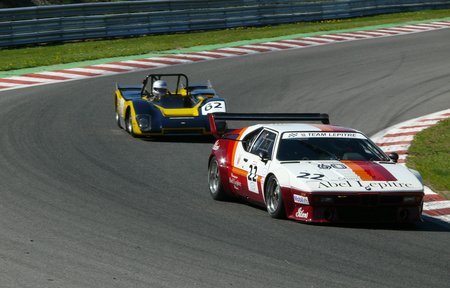
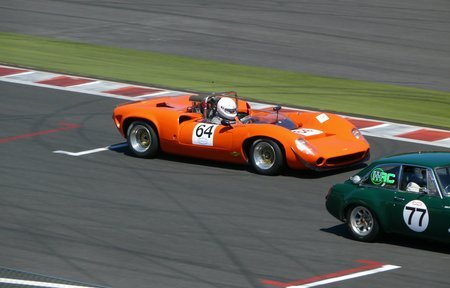
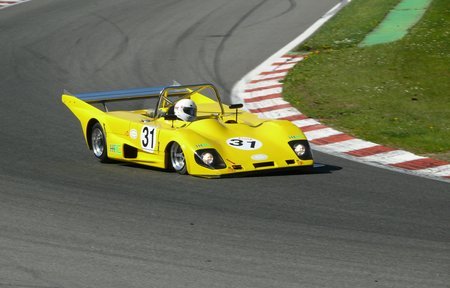
The CER race is a one-hour race with a mandatory pitstop and most of the cars in the entry are sports cars or GT cars built and raced in the 70s but some late 60s Chevron B16s, Lola T70s and a few more were present as well. The race itself was rather interesting, especially the first stage when group of five cars swapped positions each lap. Those were Lola T298 of LMS driver Jacques Nicolet, former Joest Porsche 936 that finished second in Le Mans 1980, a Chevron B36, three-litre Lola T280 and Can-Am version of Lola T70. The Can-Am Lola started from the second row but its power unrestricted Can-Am engine with its acceleration helped its driver, David Ferrer, move to the lead. David managed to keep it for a single lap. Then it was Jean-Marc Luco in the Porsche 936, who took the lead while the Lolas and Chevron behind circulated in a close formation swapping their positions nearly at each corner. Luco managed to create some gap in the third lap over his opposition but at the time the leading group was leaving Eau Rouge a huge smoke was seen above the track. When the Porsche did not return back to the finish line, it was clear what the reason of the smoke was.
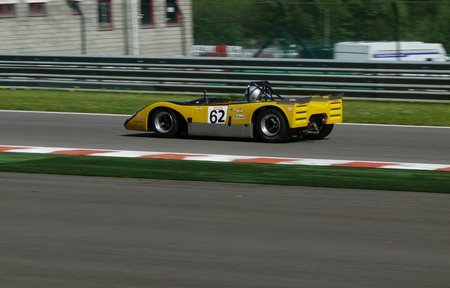
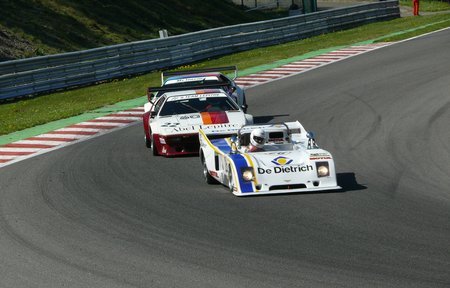
A few laps later the Can-Am Lola struggled to keep the pace with newer sisters T280 and T298 as well as the Chevron B36 but the remaining three cars were in the close battle until the middle of the race when the mandatory pitstops enlarged the gaps a bit. It helped especially to Olivier Cazalieres in the Chevron B36 who moved from third position before the pitstops into the clear lead ahead of Nicolet in T298. Despite Nicolet was quicker, it was the technical problem with the Chevron that helped him to move the lead again. After that Nicolet was easily able to keep the lead over Michel Quiniou, who gave up catching him and despite setting the fastest lap of the race decided the stay second. The margin between him and the winner was over 23 seconds. Those two cars were the only competitors of the quick quintet of the early stages of the race that finished the race without major problems. The Can-Am Lola retired 4 laps before the finish after losing a lot of time during the pitstop almost being catched by the best of the rest, a Chevron B16 driven by Corentine Quiniou. He was the only driver completing the race in the lead lap.
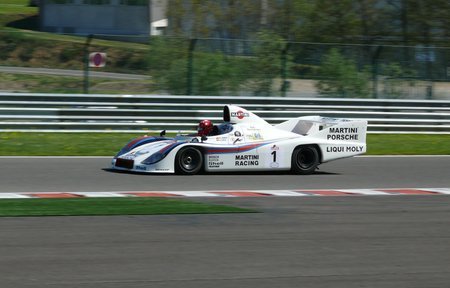
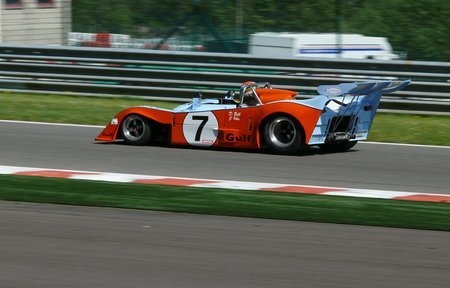
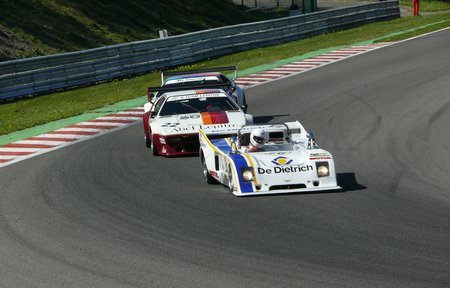
The quick and retired Chevron B36 re-appeared on the track in the final lap just to cross the finish line and get classified. Then we had four finishers with one lap gap, all but one BMW M1 were two-litre Chevrons, followed by mix of another BMW M1s, several variants of Porsche 911s and surviving Ford GT40. Further back in the field we could find another, actually rather badly driven, Chevron B36, slow MGC GT, small Lotus Elan and a terribly bad driven Ferrari 275 GTB which was actually much much slower than whatever safety car. Among twelve retirement and a few more non-starters we had several other interesting cars which are worth to mention. One of them was Mirage Gulf GR7, which did not start following its Friday's accident, while other two mid-seventies well driver spiders were out of the race within two laps. It was another Lola T298 running sixth just behind the quick quintet (to our surprise not listed in the official results at all) and a nice GRD S73, which inherited sixth position from the early retiring Lola but lasted only two laps.
Friday - 17th August
Practice sessions
The first two LMS practice sessions on Friday again confirmed Peugeot dominance over Audi in terms of speed. In the first session the Peugeots were by more than 2 seconds faster. In the second session the Peugeot team concentrated on giving maximum track time their third drivers, Jacques Villeneuve and Alexander Wurz, who were here to prepare for the coming Le Mans 24 Hour race, while Audi number 1 decreased the gap to just half second in the session, resp. one second compared to the morning Peugeot's times. Even more surprising was already mentioned time set by Oreca splitting the two Audis.
Saturday - 10th May
Final practice session
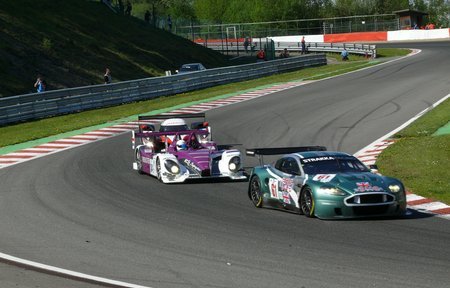
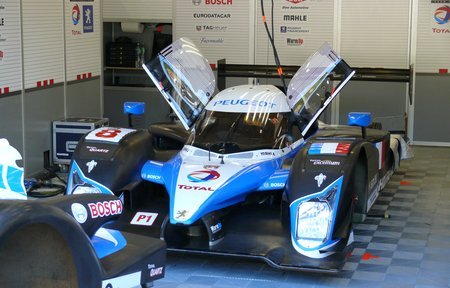
The final practice session saw a sports car running over the Spa circuit under two minutes for the first time since the group C era. Peugeot number 8 set 1:58.180 and Audi number 1 set 1:59.208. The only other sports car registered by our system running under two minutes around Spa is Sauber-built Mercedes C11 in 1990 (1:59.35). Need to say that the Bus Stop chicane has been changed several times, so the times are not quite comparable but it is still a very good effort by the current prototypes. A bit surprisingly the Charouz Lola Aston Martin ended up fourth with 2:01.817 - the best time to be set by a private car over the weekend and Peugeot number 7 only fifth despite completing similar number of laps as all protagonists and mid-fielders.
It is worth to say that the session was stopped two times by red flags. In both cases we had accidents. First it was Pilbeam running too quickly from the Rivage turn and hit the wall. The other red flag was caused by crash of WR. We hoped the cars would be repaired. While the Pilbeam later re-appeared in the postponed part of the qualifying session, WR engineers try to work on the car but later during the CER race they were evidently packing team accessories and any chance of WR racing tomorrow were gone.
Qualifying session
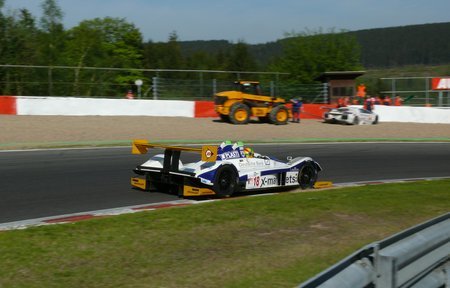
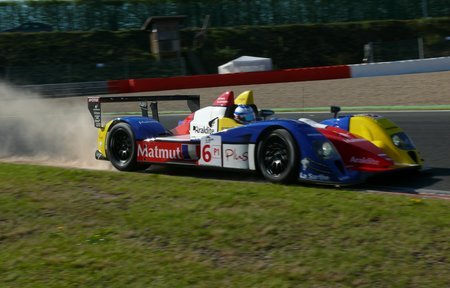
The qualifying session started as usually with Audis at the top early in the session while Peugeots were sitting in the pitlane waiting until later. Meanwhile the Courage-Oreca was in its flying lap but probably a broken front left suspension caused wild spin in the Bus Stop Chicane. The car then returned to the pits, even recorded 'some' time still sufficient for grid position among the best GT2s but that was all we could see from the Oreca during Saturday, unfortunately. Hopes for a very good time among petrols were gone. Lola Aston Martin then dominated privateer, non-diesel 'class', whatever we call it, but Mücke never got close to his time in the final practice session. It was probably caused by two red-flag accidents, which split the session to three very short sprints.
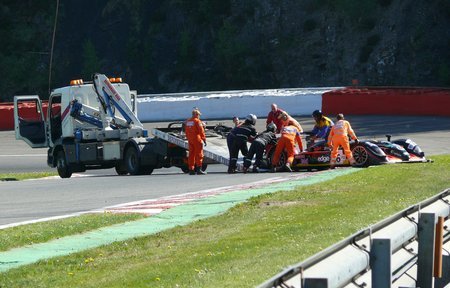
In both accidents it were old LMP2 Lolas that were involved. First accident was the Kruse-Schiller Lola-Mazda in its first flying lap and thus no time, then ASM Lola went off in the same turn. Both cars destroyed front. The Kruse Lola was damaged more and later in the evening the team confirmed us they would not start in the tomorrow's race as it is not possible to repair the damage chassis. Just if the damage was a few centimeters shorter, we would have the car on the grid. To complete reporting on damaged cars in Saturday, all four accidents affected LMP2 cars. While repaired Pilbeam appeared during the final qualifying laps and ASM-Lola confirmed the car would be repaired for Sunday, apart from Lola-Mazda we lost also the WR LMP 2008 suffering accident in the morning session. All the accessories were packed during the late afternoon and we are confident the team will not continue this weekend anymore.
In the very final part of the qualifying session Peugeots finally got to set some competitive times, with only two flying laps available. Sarrazin fulfilled his role in his first lap and moved to the pole position. The other Peugeot suffered oversteering and Gene was not able to beat McNish's time in the Audi no.1. So for the first time in the modern LMS we will not have the front row Peugeot-only. Need to say that McNish completed only 3 laps in the qualifying and did not appear after the red flags. It might have been slight advantage and Peugeot may reconsider its late pit-off strategy in qualifying.
Sunday - 11th May
Warm Up
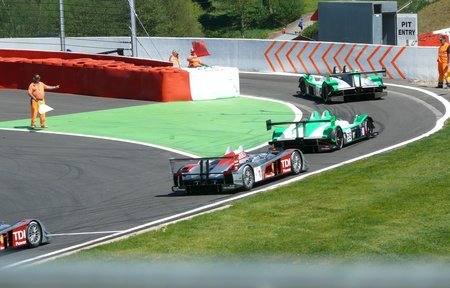
The final view at the warm up results looks pretty similar to those from the qualifying session: Peugeot-Audi-Peugeot-Audi. But this time it was Peugeot number 7 at the front unlike yesterday. The second Peugeot was once again very close to the Audi of McNish and Capello. Since the Lola Aston Martin was, as usually, more or less practicing pitstops, "the best of the rest" was Courage-Oreca, now freshly rebuilt after its problems in qualifying, followed by usual mix of Porsches and Pescarolos with Epsilon Euskadi among the mix as well.
The Race (short report)
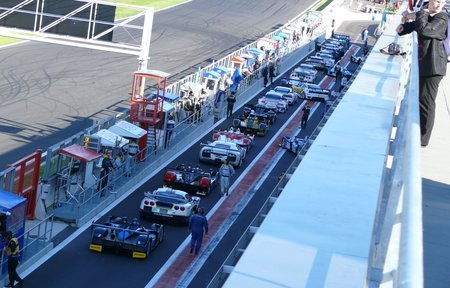
The race, while not as dramatic as the Monza race two weeks ago, was still a good one, in front of 35 thousands of spectators and quite excellent weather. The start was delayed by one lap after Essex Porsche and Embassy WF01 collided in the formation lap. A second formation lap was added, Essex Porsche started from the back as some repairs were necessary while the Embassy was unfortunately out of the race. This meant just 41 real starters. After the start Pedro Lamy in the Peugeot no.8 took the lead ahead of Allan McNish in the Audi no.1 and Nicolas Minassian in the Peugeot no.7. The second Audi driven by Mike Rockenfeller was lagging a bit just to keep ahead of the Lola Aston Martin with Stefan Mucke at the wheel. Other two spots were occupied by Pescarolos no.16 and no.17 running just ahead of LMP2 leaders: Verstappen's Porsche RS Spyder and the new Lola Coupe LMP2 driven pretty well by Andrea Belicchi. The next positions in the early stages of the race were like this: 18, 15, 27, 20, 32, 25, 35, 45, etc. Audis later appeared in the lead but it was just during the time of Peugeot's pitstops. The car number 1 still ran well and after the first series of pitstops the position settled again like this: 8, 1, 7 and 2. By that time the fifth position belonged to Pescarolo no.16 driven by Jean-Christophe Boullion since the Charouz Lola hit problems and despite it continued to circulate on the track until the end of the race rather quickly, it was alse a frequent visitor of the pits. Their race then looked more or less like a test session for the Le Mans race rather than anything else. The Pescarolo no.16 was much quicker than the rest of the non-manufacturer entries, well, with one exception. The Courage-Oreca no.6 that suffered technical problem in qualifying had to start from the back of the grid after changing tyres (similarly as the ASM Lola no.40) but improved very quickly. Pescarolo really had a reason to worry. After one hour the Oreca was already ahead of the Pescarolo by 5 seconds. In LMP2, perhaps a bit surprisingly, the Lola Coupe was in the lead ahead of two Porsche Spyders.
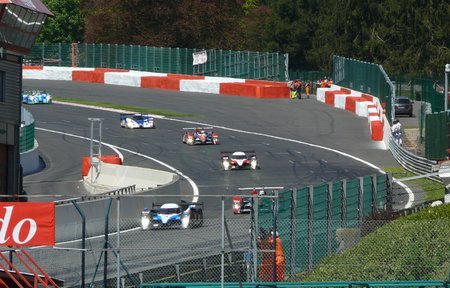
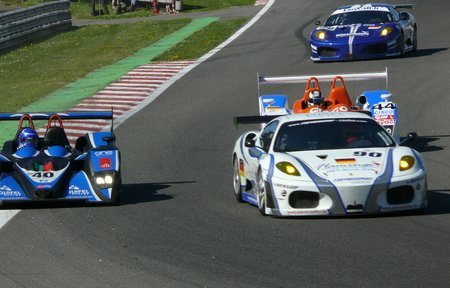
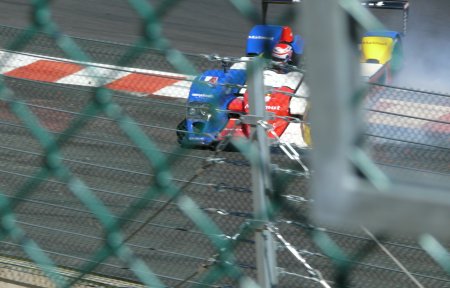
In the middle stages of the race after the first yellow period Wurz in Peugeot no.8 was catching Audi no.1 while the Peugeot no.7 was in the lead and while overtaking the Spyker no.85, he touched it and hit the Audi no.1 as well. As results of this collision the Peugeot was destroyed and out of the race, while the Audi had to visit its garage and became out of contention for the win. The remaining Peugeot no.7 then more or less easily kept the lead over the slower Audi no.2 and the race lost some of its drama. Meanwhile very well running Courage-Oreca inherited the third place. The three cars then finished in this order.
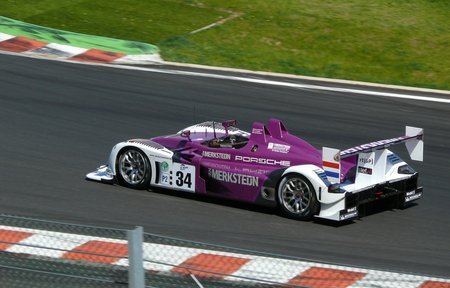
LMP2 race started as an interesting battle between Verstappen in the Porsche no.34 and Belicchi in the Lola Coupe. The Lola ran really very well and was even 4th overall after three hours of the race. The two were later joined by Horag Porsche no.27. Unfortuntaly the Lola had some problems in the final part of the race, was delayed a lot and in the end it stopped behind the finish line with one lap to go and was not classified at all. Despite the Horag car was often in the class lead during the final part of the race, in the end Verstappen won the race to the pleasure of many Dutch fans present here.
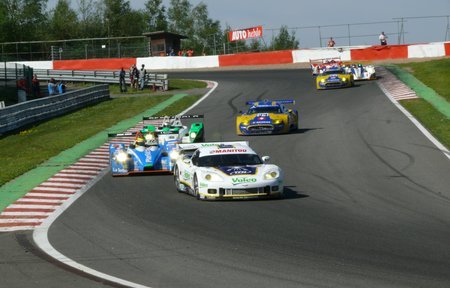
Class GT1 was a battle of only a few cars, in fact just two were expected to fight for the win, the Modena Aston Martin no.59 driven by Enge and Garcia and the Alphand Corvette no.72 driven by Alphand/Moreau/Goueslard. The Corvette led from the beginnig and The Aston Martin was later delayed with troubles. But instead of an easy win for the Corvette, it was the Lamborghini of Kox and Rusinov that surprisingly led for a long time until it was slightly damaged by a quicker prototype, lost more than one lap. It then finished second behind the Corvette. The Aston Martin came third and the only other finisher in the class was debuting Strakka Racing Aston Martin, the team known more from international six-hour races in Brno or Vallelunga.
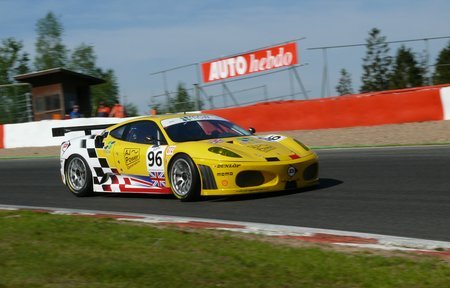
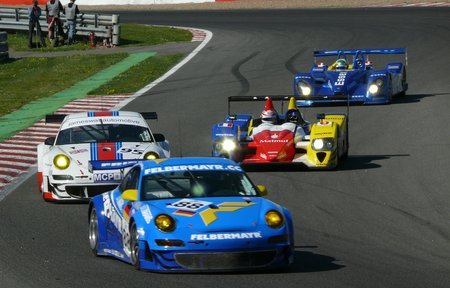
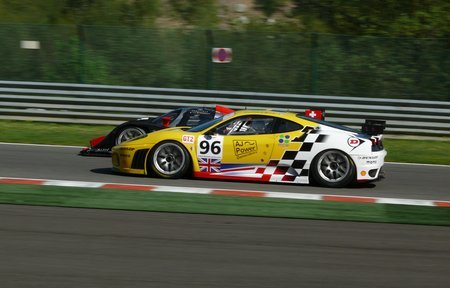
Real battle until the final corner saw the GT2 class. The Virgo Motorsport Ferrari of Bell/Bruni and the Proton Felbermayr Porsche of Lieb/Davidson were changing in the lead throughout the entire race and in the end only 0.184 was the difference between them, with the Ferrari crossing the line first. The next closest car was full three laps behind but it was the second Proton Felbermayr entry, which was something not expected, similarly as fourth place of privately entered Spyker. The fact is however that all other quick GT2 entries were either delayed (IMSA Porsche no.76) or retired at all (both Farnbacher cars, Ferrari and Porsche).
Car by car report:
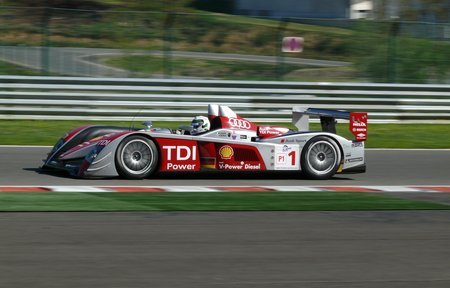
LMP1:1 - Audi
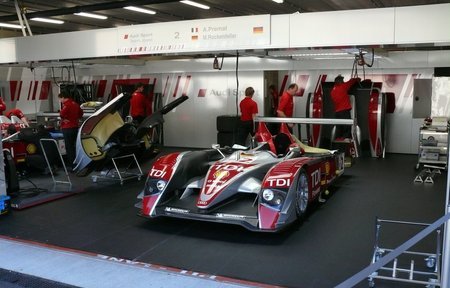
This Audi in hand of McNish and Capello almost matched the speed of the Peugeots. Originally did not seems that quick but fantactic time to Audi standards in qualifying moved the car into a real consideration for the win. In the race it ran easily second overall behind Peugeot no.8, then after a short-lived leading during the pitstop period it was running second again, behind the Peugeot no.8. While delayed by a slower car, Peugeot catch the Audi but collided with a factory Spyker and hit this Audi too. The race was decided, there was no serious opposition to the remaining Peugeot afterwards.
2 - Audi
Slower of the two Audis, its times were often closed to the Charouz Lola or the Courage-Oreca then to the other three factory diesels. Being catched by Mücke in Lola during the first hour. Kept four position in the first part of the race, though for a while running second after Peugeots pitted earlier. After collision of quicker Peugeot and Audi, moved from fourth to second and despite finishing only 30 seconds behind the winner, there was really never a real prospect this car could win unless the leading Peugeot hit troubles. Safety car periods might have helped this Audi not to be lapped.
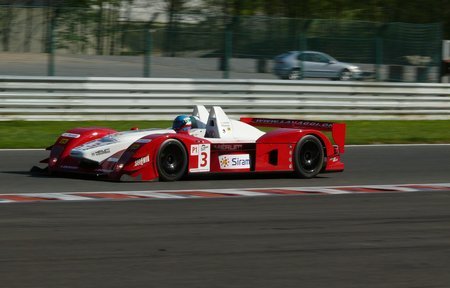
3 - Lavaggi
Probably the best performance ever recorded by the Lavaggi team with its own car. They improved its time steadily session after session starting at 2:19 to 2:11.0 in the race. Since qualifying afterwards Lavaggi/Kaufmann were regularly quicker than other slow LMP1 entry, the Saulnier Peugeot, and well ahead all GT class cars. Despite the car looked more reliable than whenever last year, it was not still enough to make a result. It lasted on the track for three and half hours but already very much delayed compared its performance in the first hour.
4 - Saulnier Pescarolo
Actutally the slowest LMP1 car, still very welcome competitor. Its driver Jacques Nicolet proved his abilities in a support CER race where he ran very well with a yellow two-litre Lola T298, reminiscent former winning car of Roland Binder from Interserie, and winning a race against three-litres. With his co-drivers he had a good race, actually the best this season, collecting first points and finishind 14th overall.
6 - Courage-Oreca
The car surprised with its speeds already during practice sessions, even separating the diesels on some occassions. Unfortunately, it broke in its first flying lap in the qualifying session, so was not enabled its full potential. The tyres had to be changed for the race, which meant to start from the pitlane. But the car was easily quicker then anything else but the four factory cars and fragile Lola Aston Martin, which effectively meant the podium result in its first ever finish.
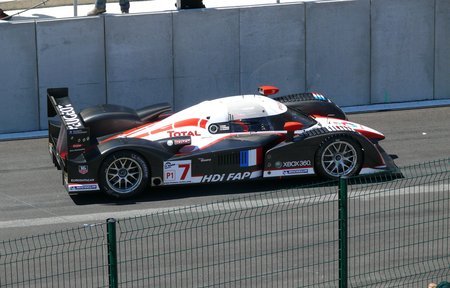
7 - Peugeot
This Peugeot was slower of the two cars usually, suffer understeering during the qualifying and ran well behind the better Audi in the early stages of the race. After the sister car ended up in the bariers after collision, this Peugeot was easily able to win the race.
8 - Peugeot
Set pole position, lead early in the race but was eliminated after Wurz accident during lapping slower GT2 car.
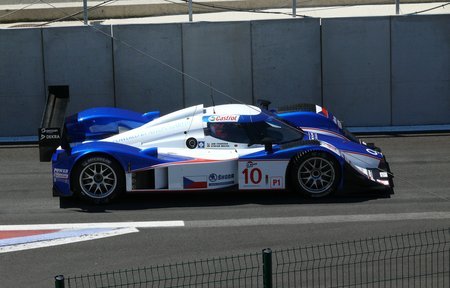
10 - Charouz Lola
As usually best of the privately entered cars, ran fifth before the first pitstop series, and it was much closer the the diesels than to anything else behind but continuing problems (battery and alternator) of the car converted its race to a test session. This time it finished out of points to the great disappointment of the team. It was nice to see Charouz set the best lap of the car, as it confirms that the two driver are now well performance ballanced and if the ireliability is solved, they have clear potential to finish on the podium regularly. Unfortunately we have only two races in the championship left.
15 - Creation
Almost on podium in the last race, this time nothing special seen of the car and team, that suffered by an accident of its primary driver Jamie Campbell-Walter. This car, chassis 003, never really shined during the weekend but having not hit any major problem, Hall and Kerr finished and acquired three point for the championship.
16 - Pescarolo
Third fasted petrol-fuelled car. After bad luck in Monza, this time the duo Collard/Boullion finished behind three surviving diesels and... the Courage-Oreca. It seems this if Oreca gets reliable, Pescarolo team will have another car to look at - after the diesel Peugeot, then arriving diesel Audi, recently production engine powered Lola Aston Martin with larger rectrictor allowed, Oreca might became the first team to beat 'Pesca' without hearing complaints on rules over and over again. Well, three years ago, only because the regulations tried to promote the new, not so popular, cars back then, Pescarolos were by five seconds quicker each lap than the Audis and other conventional cars, and I can hardly remember any complaints about it... Still very welcome and very good team considering its budgets, hope to have Pescarolos in the championship for many years to come.
17 - Pescarolo
Though the speed of the car and early race performance was nowhere near its sister car no.16, it ran well during most part of the race, Primat and Tinseau had its position just behind the no.16 almost definite... In fact quite deifinite if it did not retire in its final lap running out of fuel. Really a big shame after all the effort during the race weekend stopping several hundreds of meters before the finish just because a bad pitstop fuel strategy. The team would deserve more than DNF in the result sheets...
18 - Rollcentre Pescarolo
This car usually impresses with its reliability rather then an absolute speed. This time it did not impress even with the realiability despite in top 10 in the middle of the race. The real hope for the entry became after Vanina Ickx was not able to overtake delayed Lavaggi for many laps until she braked later than the Lavaggi driver, turn the wheels into the wall. Since she managed to get the car to the garage, Rollcentre mechanics have something to work on. The car later re-appeared on the track but outside points or any other chances for result. Still finished full five laps ahead of the Charouz Lola.
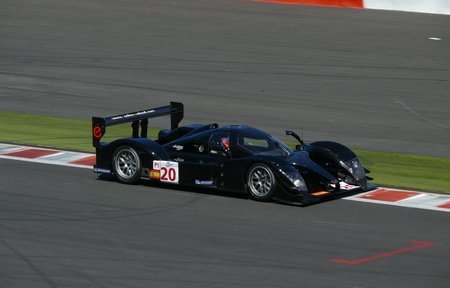
20 - Epsilon-Euskadi
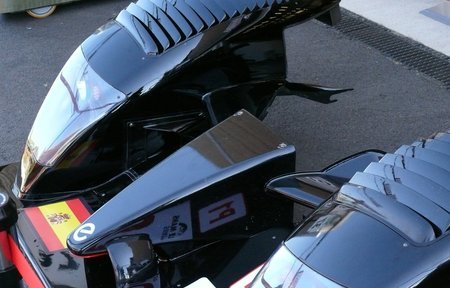
Arguably the best looking in the field, all Spanish car, was always pleasure to see it circulating around. Though hardly ever broke into the top ten, final results was worse than we hoped for after some problems and delays in the pits. On the other side, very welcome first finish for the team and the car, first points and eleventh position overall. Not really bad after 14th in qualifying and in the early laps of the race, but could have been easily better. We definitely wish the team good luck in the next races and also some sponsorship in order to field their second car, which is always entered but never actually used. Too nice and attractive just to stay away...
LMP2:25 - RML MG Lola
Officially a production car manufacturer MG entry, champions of the 2007 season are still suffering this season, either with speed or with reliability. In the last two races they were at least able to finish fourth in class and thus keep best non-Porsche spot but here at Spa, not only they were not as quick as the last year compared to its opposition but also suffered with reliability. At the beginning the MG ran well fifth but as the race progressed, Newton and Erdos found themselves at the very end of the field, OK, just ahead of very much delayed Radical and in the end also catching the Charouz Lola that took the race as a test session after their chances were gone.
26 - Bruichladdich Radical
Effectively a factory entry by Radical looks now a bit out of pace, unfortunately. It suffered some problems already very early in the race when one lap it ran very slowly, almost looking as immediate retirement, then circulated normally for some time without visitting the pits. But at the end of the first hour and then especially during the second hour it was a in the garage for a long time running the very last after that, just trying to get the car to the finish within the limit to get classified and eligible for points. Later it was the lost and re-appering Embassy that ran behind the Radical for in the fourth hour but after its retirement the Radical became the last classified finisher, just a single lap behind the Charouz Lola, which we found not so bad considering a fact we believed it had been already out of the race in the second hour. As it is one of the better looking car and still relavitely new builder on the sports car scene, we would strongly wish the team to gain some success this season. Perhaps a new car would be needed as it is basically the early 2006 model and the development of the current LMPs progresses very quickly.
27 - Horag Porsche
Probably the best race for the Horag Porsche team so far. They were very close to winning drive after leading most part of the end stages of the races, loosing it only during the pitstops but at the end the Merkenstain Porsche with very quick Verstappen appeared in the lead and cross the line 10 seconds ahead this Horag entry driven by Lammers and Theys. Lienhard was listed in the final results too but the podium ceremony and press conferent and the two were present.
31 - Essex Porsche
This Porsche draw its attention by hitting the quicker Embassy car and then catching up drive after starting from the pits. The team struggled a bit during practice sessions since they, as the only Dunlop-using Porsche team neede more track time to setup the car correctly while there was a lot of red flags in general. At least the team was complaining about it. Even in the race they were never at the pace of the Horag and Merkenstein cars but in the end inherited the third place after all quick LMP2 entries suffered serious problems.
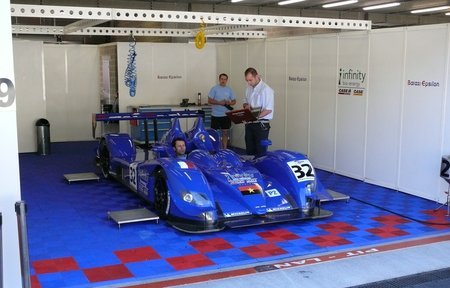
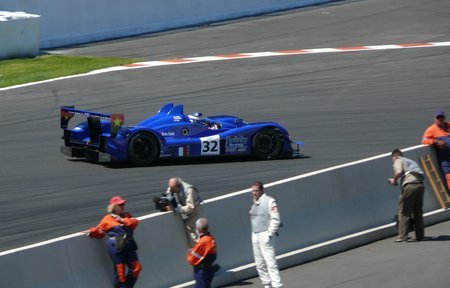
32 - Barazi Zytek
Very pretty and quick car, likely the best of the pre-2008 LMP2 cars. The third fastest in qualifying just behind Verstappen and the Lola Coupe, ran fourth in the race after being overtaken by the Horag Porsche, still fourth after two hours, very much delayed at the 3-hour mark, disappearing from the race only 10 minutes later. It is bad for this nice team to be still without any points after very promising 2007 season when they scored two wins and one second in the final four races.
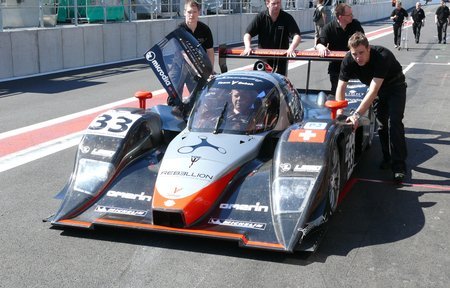
33 - Speedy Lola Coupe
The most favourite LMP2 car as it is the only small coupe. It was nice to see it running quicker than all of the Spyders during the first hour and led the LMP2 field. After three hours it even somehow appeared fourth overall just behind Peugeot, Audi and Oreca. Still ran in touch with the two quick RS Spyders, changing positions mainly during pitstops but the final hour was for the car rather frustrating. Many problems with electronics, a lot of pitstops, lost almost 10 laps and retired in its the very last lap and thus not classified with no points for the series. A sad end after an extremely promising race.
34 - Merkenstein Porsche
This is the fastest LMP2 entry, at least when driven by former F1 driver Jos Verstappen. He had a lot of fans here on the main grandstands so it is probably good for the better popularity of the series that he won here, though it will be probably rare to see any other LMP2 car win. This time the Lola Coupe was even quicker than Verstappen and led for some part of the race but the reliability is clearly on the Porsche side. Another Porsche, the one from Horag let for a major part of the final stages of the race but in the end Verstappen moved to the lead and made his fans really happy.
35 - Saulnier Pescarolo
The only Pescarolo in LMP2 class, actually this car was built in 2008 unlike most of the Pescarolos racing here. By speed well in the middle of the LMP2 pack but considering the reliability and consistency of its performance, Pierre Ragues/Matthieu Lahaye continued to provide us with a good results improving race after race, at least regarding the overall position. After 13thi n Barcelona and 12th in Monza they were now in top 10 and fourth in class behind just the three present Porsche Spyders. There is definitely several quicker non-Porsche LMP2 entries but none of them produces results like this car, maybe except the team RML which is ahead of this Pescarolo among teams's provisional classification, which is fifth.
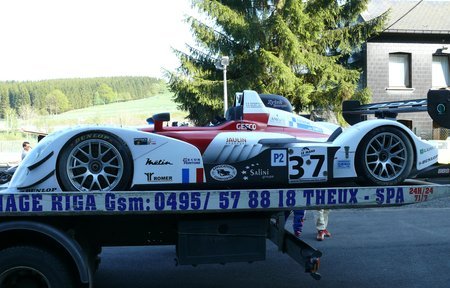
37 - WR
Very welcome return of a well known French team with a huge Le Mans tradition that reaches until mid 70s, back then under the name WM, did not bring any better results to the crew this time. The car was as usually by far the slowest LMP2 entry matched well with the slower GT1 cars suffered a few incidents during the practice sessions. The final of them disallowed the small team to continue in the meeting and thus started to pack up during the Saturday's CER race and was not seem afterwards. Hopefully the team will not get discouraged, such teams like WR as also very much needed by the entire series.
40 - ASM Lola
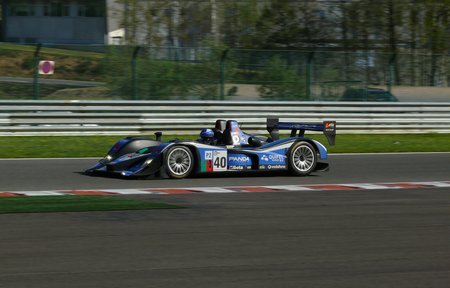
Portuguese Lola driven by Olivier Pla crashed in the qualifying at the exactly same place as a few laps before the similar Mazda-powered car. Fortunately the damage was not as serious as the team thought when first saw the crash car being just brought back by the recovery truck and was able to repaire it. Despite qualified one position ahead of the slowest Porsche RS Spyder, it had to start from the pitlane as the tyres had to be changed following the accident. Perhaps this saved the car for the race, considering a fact how the car no.46 ended up. The ASM Lola quietly improved from its last position throughout the GT2 and then GT1 field to get into top twenty after the first hour but unfortunately had to stop 20 minutes later with dead engine becoming only the second car retiring from the race. It would be nice to see this promising team next year with a new Lola coupe.
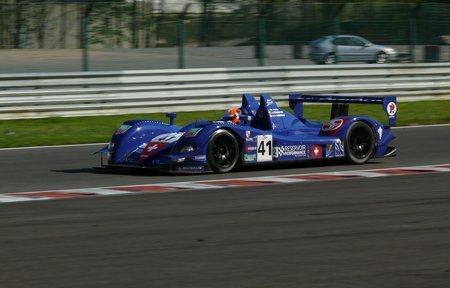
41 - Trade Zytek
The car that in hands of a good team has winning potential was seen more or less only in the middle of the second half of the LMP2 field. Fifth position at the end of Sunday was probably the best results the team could hope for. Let's hope they will improve their performance even more but we are afraid we will not see this car running at the pace when it was raced by the factory or by Team LNT.
44 - Kruise-Schiller Lola
Very welcome Mazda-engined entry had really a bad weekend. After OK-performance in practice session with time in 2:10 - 2:12 range near the end of the LMP2 field the car was set up to brake the 2:10 in qualifying but de Pourtales moved the car into the wall. The front was damaged but there were still hope the car would appear on Sunday... until we spoke with the team who confirmed to us that it is not repairable at the circuit, the chassis was hit. If the crash was a few centimeters smaller we could have seen them. Wish more luck the welcomed team next time.
45 - Embassy
Almost as quick as its sister car, had much more luck but still did not finish the race. Run 7th in class in the first hour of the race, at one hour mark even classified 6th, after 100 minutes in the race delayed for a long time, thought to be retired by before 3 hour mark back on the track running last of the cars still in the race behind similarly delayed and thought-to-be-retired Radical. But disappeared from the race one hour before the end.
46 - Embassy
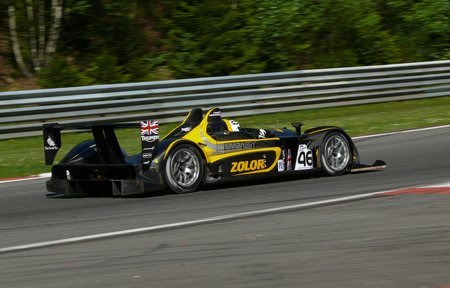
The car was improving throughout the weekend, always in TOP 20 in all sessions, set fantastic 2:08 in the qualifying even beating one of the RS Spyder. Unfortunately that became fateful for the car. This was gridded 16th and the Porsche RS of team Essex moved from 18th to 17th spot after ASM Lola started from the pitlane. Porsche driver Casper Elgaard did a stupid thing, as per his own words during press conference, and shoot this Embassy out of the track in the formation lap. The car was stalled and return back to the race, in effect being considered as a non-starter. Really bad luck after very promisingly looking weekend.
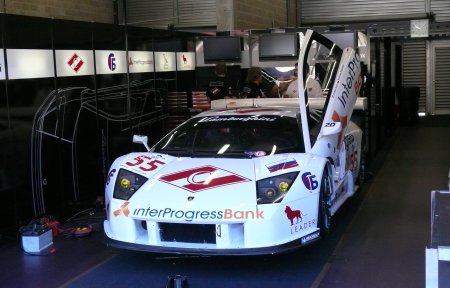
GT1:55 - Lamborghini
A great race for Lamborghini. Originally ran third, after the Modena Aston Martin came into trouble move to second but most surprisingly it appeared in the lead before the middle of the race and kept 30 seconds lead of the ALphand Corvette no.72 for several hours until it collided with a quicker prototype (Epsilon-Euskadi) and had to lose one lap in the pit. After the great performance it was only the second place, though still the best result of the Lamborghini so far.
59 - Modena Aston Martin
Despite qualified first in class, it was usually slightly outpaced by the Corvette no.72, also in the race it ran only second before hit troubles. A bit frustrating race meant the third position for Enge and Garcia in the end. Nothing really quite encouraging considering there were only five cars in the class and two of them with hobby drivers at the wheel. Set fastest lap in the race.
61 - Strakka Aston Martin
A solid debut for the team in the Le Mans Series. It was good to finish for the team. After the second Alphand Corvette retired from the race, they inherited the fourth position early in the race and kept it until the end.
72 - Alphand Corvette
Usually the fastest car in the class. Second in qualifying, then led the race in the opening hours before being overtaken by the Lamborghini. It seemed that the Corvette would finished second but thanks the collision of the Lambo later, the Corvette team could celebrate another victory.
73 - Alphand Corvette
Second Alphand car with gentlmen lineup. Usually about two seconds slower than its sister car. It was the only GT1 car to retire, after an accident. Otherwise it might have finished fourth or fifth because the first three car were simply at different levels of performance.
GT2:75 - IMSA Porsche
This was the first GT2 to retire. With Balandras and Lecourt at the wheel it showed nothing special, actually the slowest best lap of the entire field despite completing almost 50 laps.
76 - IMSA Porsche
Driven by Narac and Lietz it belonged among the faster GT2 cars but it really never shined and after losing some time with repairs, it finished in the middle of the GT2 field behind three much slower cars and the 'two' that made the race.
77 - Felbermayr Proton Porsche
Fastest Porsche in the field. After an excellent fight with the Virgo Ferrari Lieb and Davison finish second by less then 0.2 trying to win until the final corer of the race.
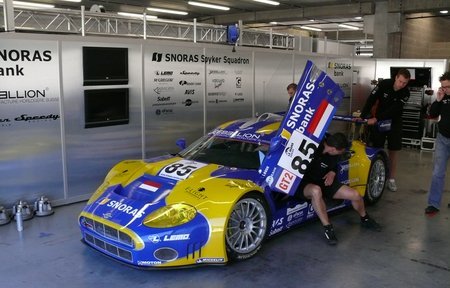
85 - Spyker
Factory Spyker made its major role probably during the accident with Peugeot. which effectively decide the race at the top of the LMP1 cars. But it was not caused by its drivers. Unlike the Peugeot this car recovered from the accident and even finished the race. Even it was the last of the GT cars and got no points for 9th in class, it was still clearly ahead of four prototypes.
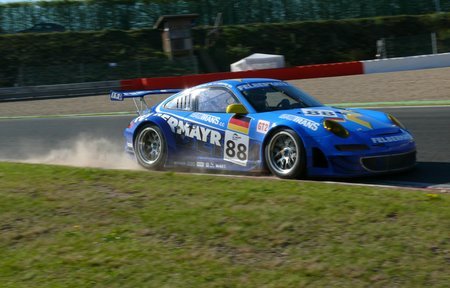
88 - Felbermayr Proton Porsche
Gentlemen driver line up in the second Proton Felbermayr entry was among the fourth slower car in the field but a good performance in the race, they could celebrate a podium finish. Really a very good result for the crew but not having retired both Farnbacher entries, this would have probably never happen.
90 - Farnbacher Ferrari
Seemed to be a bit slower that the team's Porsche but later in the race it ran most often the third. Unfortunately retired after four hours. Maybe, a bit surprisingly Ehret and Kafer set the fastest race lap in the class.
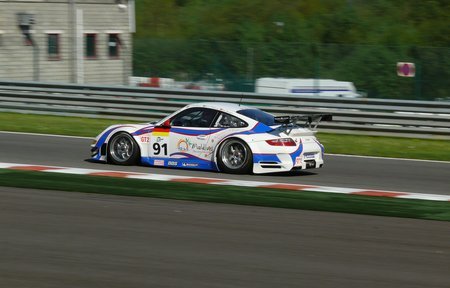
91 - Farnbacher Porsche
Orinally ran the third behind the two fastest cars in the class (numbers 96 and 77), later swapping position with its team car, though Ferari, before both cars retired after about four hours in the race.
94 - Speedy Spyker
Started from the pitlane, which effectively meant that was running last during the early laps because other pitlane-starters were prototypes. But after some consitent performance in the race it improved steadily and in the end the team could celebrate fourth place in the class.
95 - JWA Porsche
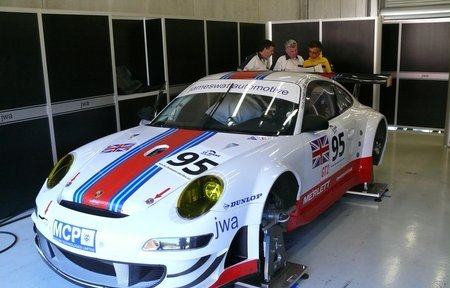
One of the also-runs in the class. While not really a slow car by its fastest lap, it was classified eigth out of nine finishers scoring a single point to the championship.
96 - Virgo Ferrari
Fastest car in the class. Leading at the beginning of the race but then changing the lead with Porsche no.77 during the entire race. Came in as a winner with the closest finish ever in the Le Mans Series.
98 - JMB Ferrari
Unkile ten years ago, these days the JMB team is mainly an opportunity for paying gentlemen drivers to get into a reliable car and have a good fun out of it. At least it is the way how it looks from outside.
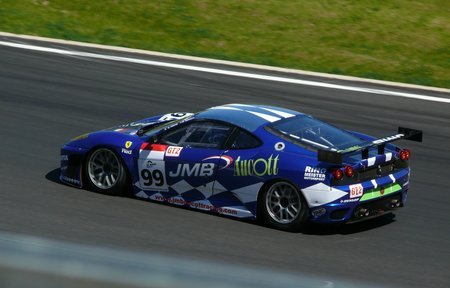
99 - JMB Ferrari
Both of the JMB entries finished in points, not that important which was of them them was quicker and which of them finished higher. But each of the car achieved one of these two goals. We can hardly expect more from either of the two JMB entries under the current circumstances. Maybe, some younger fans would not even remember the same team almost ruining ISRS ten years ago after winning race after race for several seasons...